Bank Street Residence
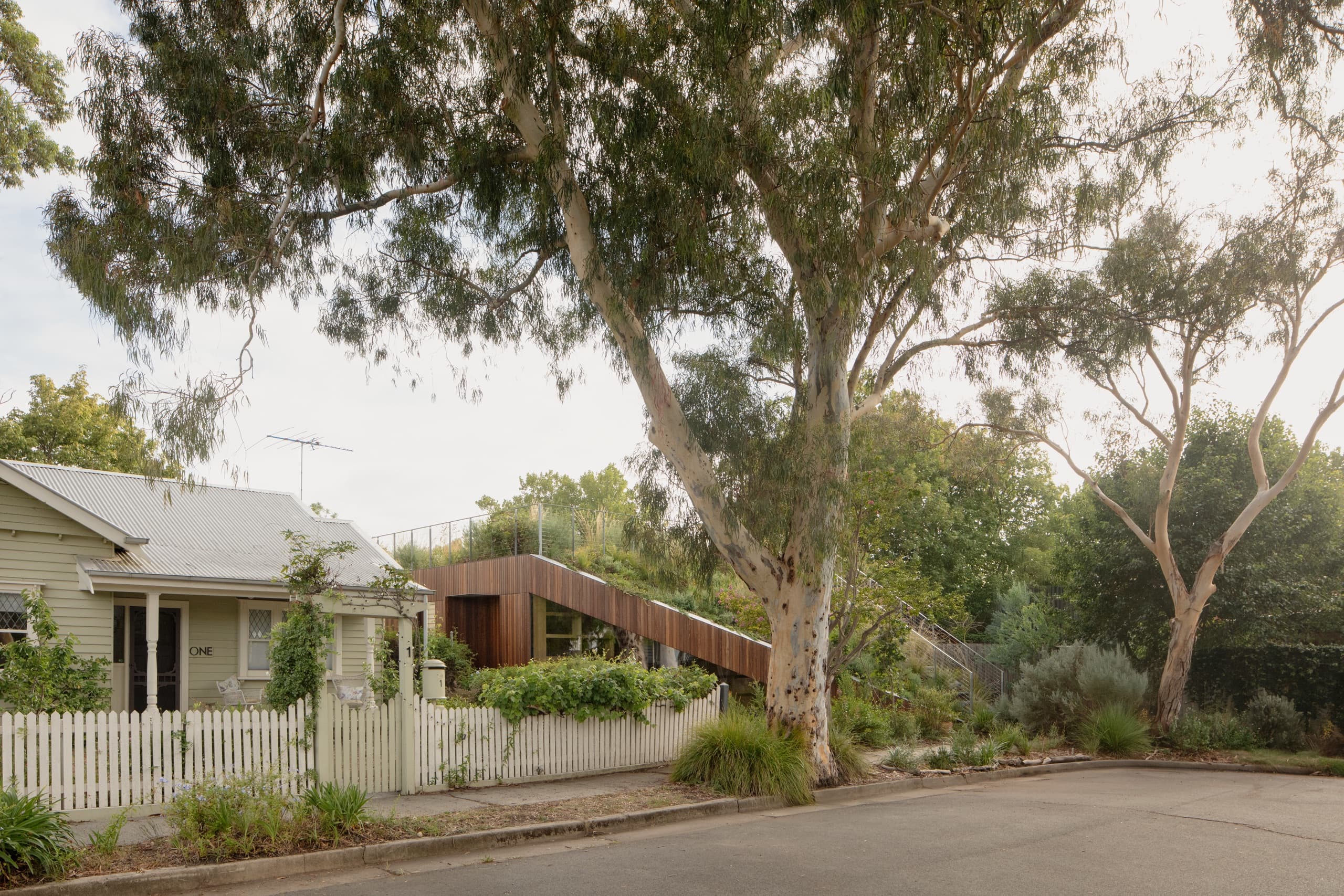
At the end of a quiet cul-de-sac in Northcote, the Bank Street House reimagines the suburban home through its modest scale and generous engagement with both landscape and community.
The project replaces a structurally compromised two-storey dwelling that was both spatially inefficient and visually overbearing within a streetscape of modest, single-storey houses. The clients, a couple with three young children, sought a larger garden, an environmentally responsive home, and a stronger connection to the cul-de-sac, which transforms each afternoon and weekend into a lively communal space animated by neighbourhood children.
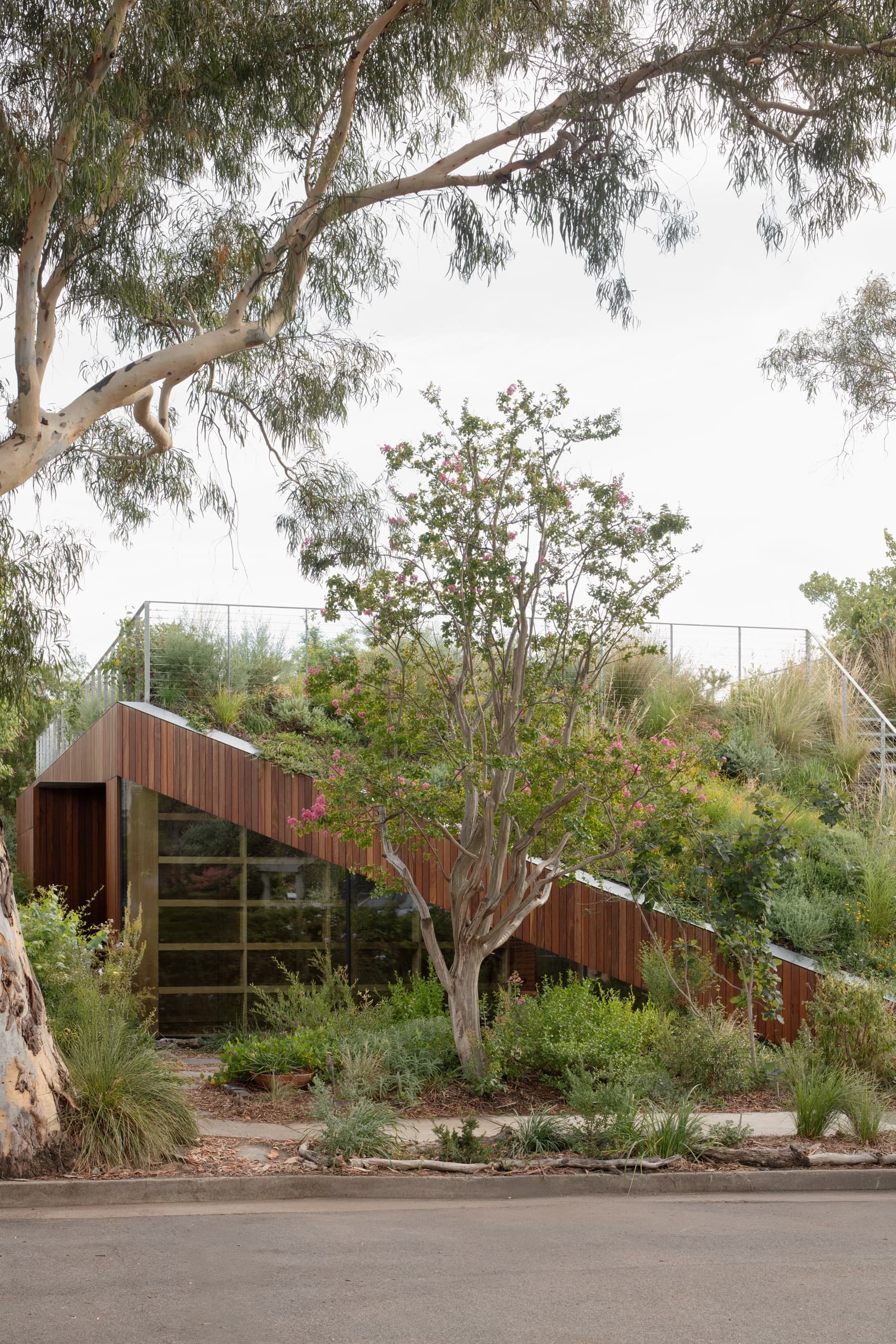
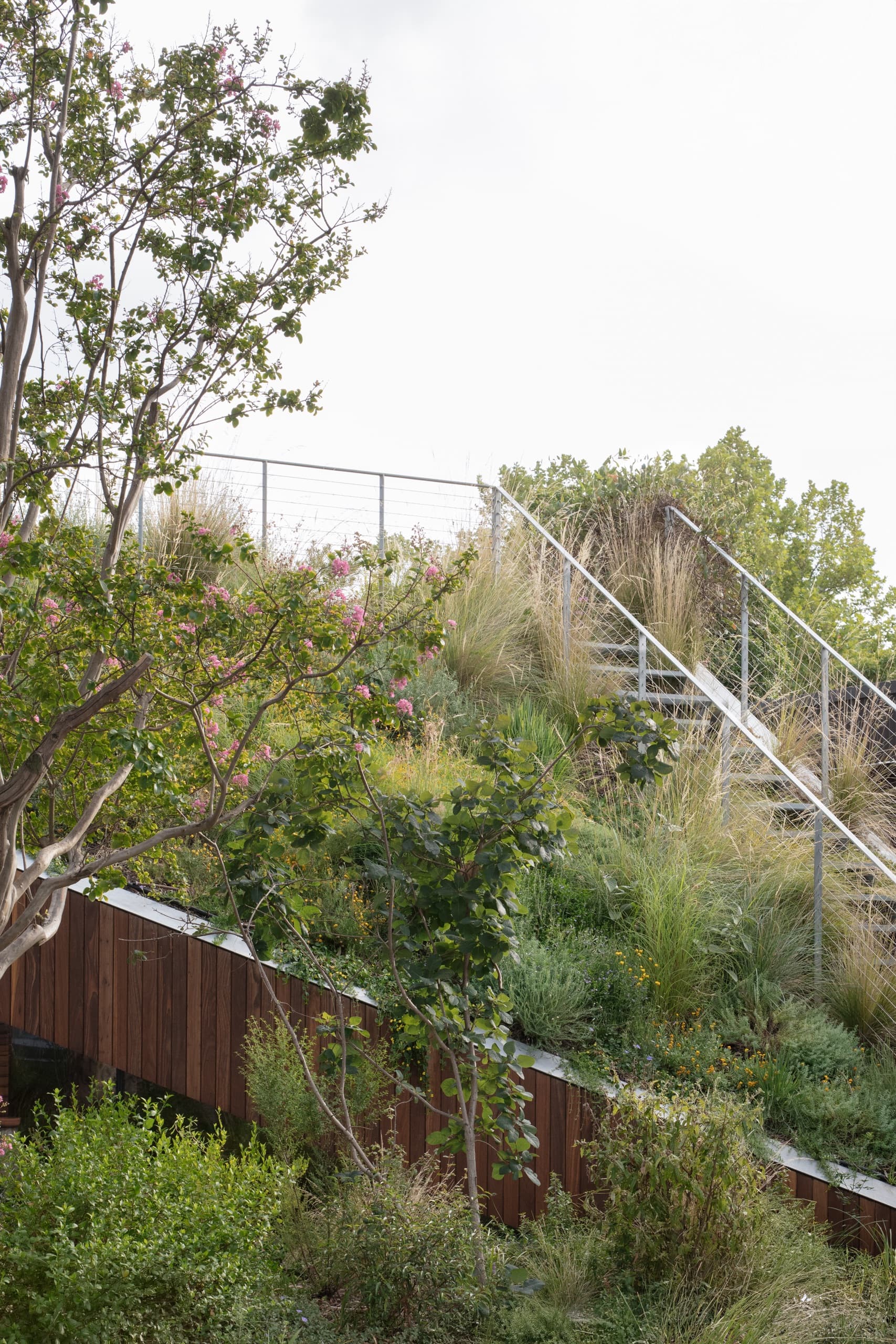
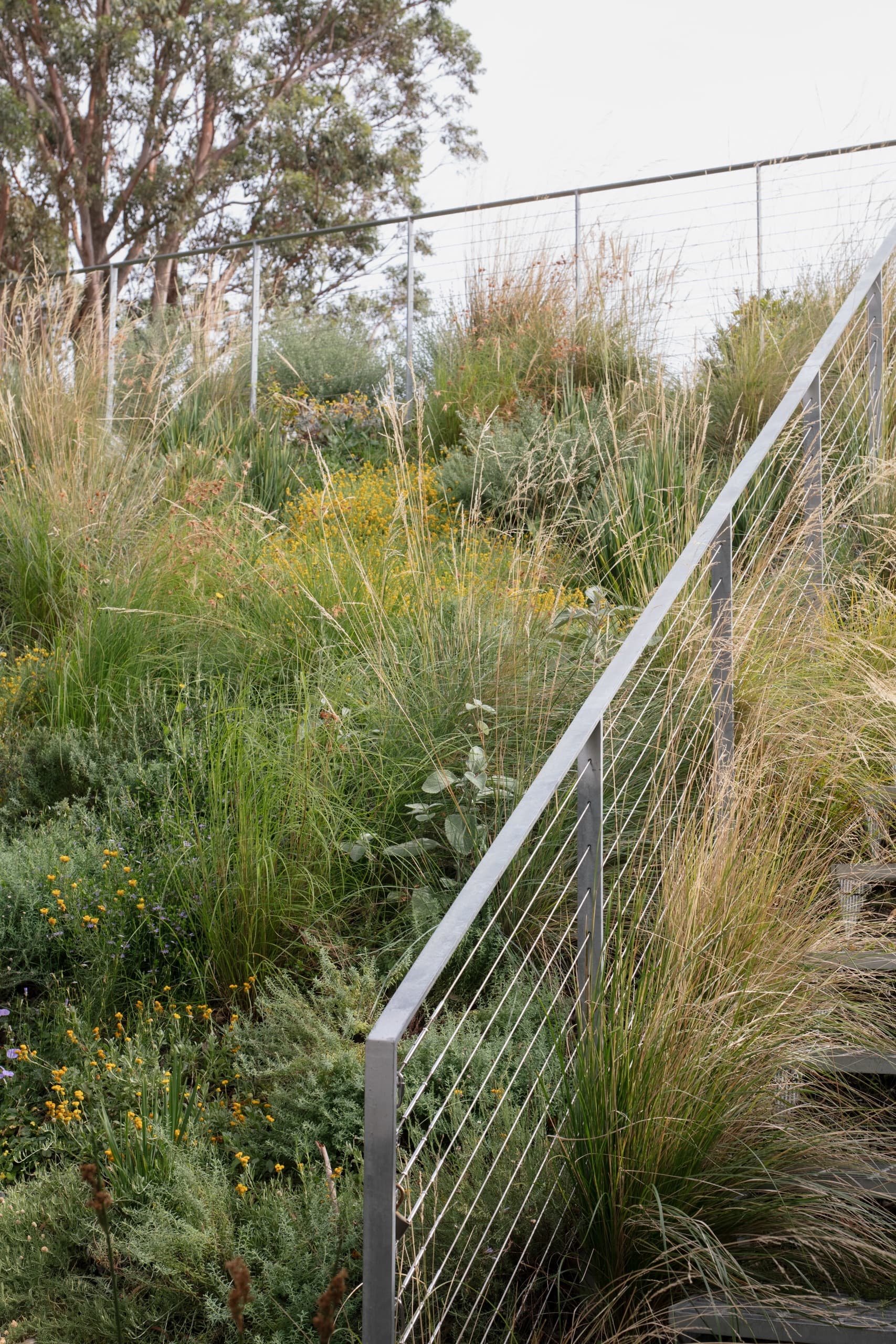
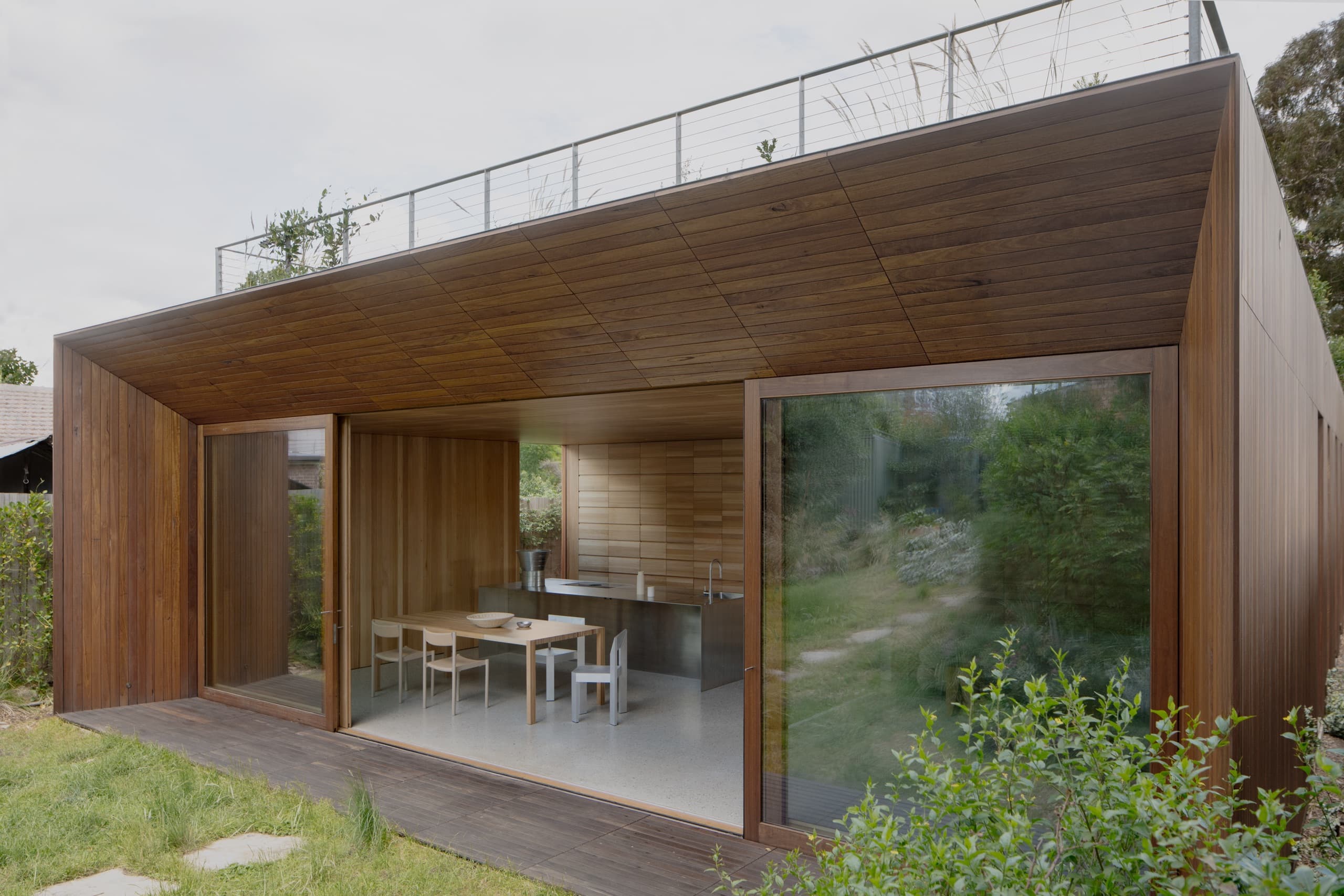
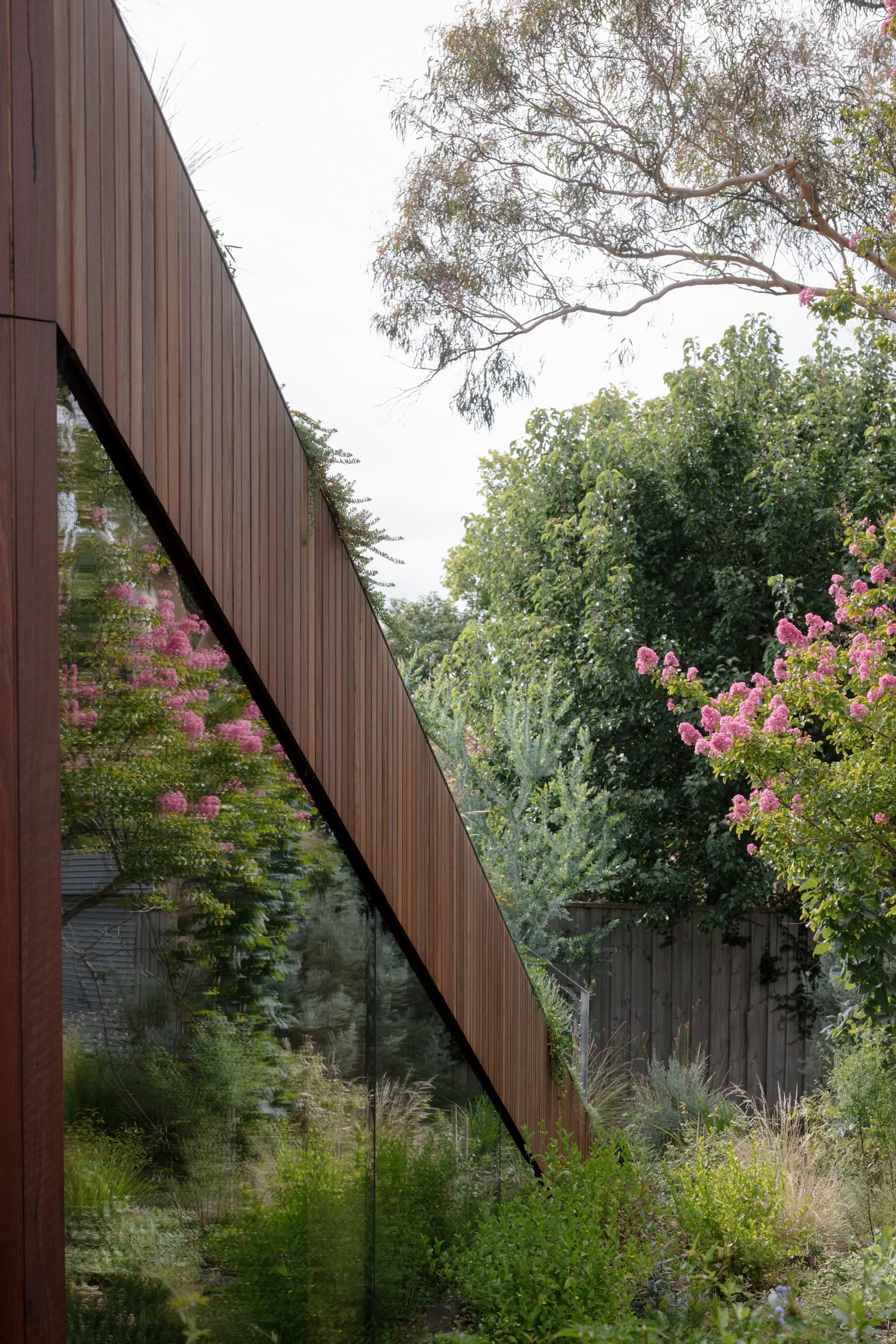
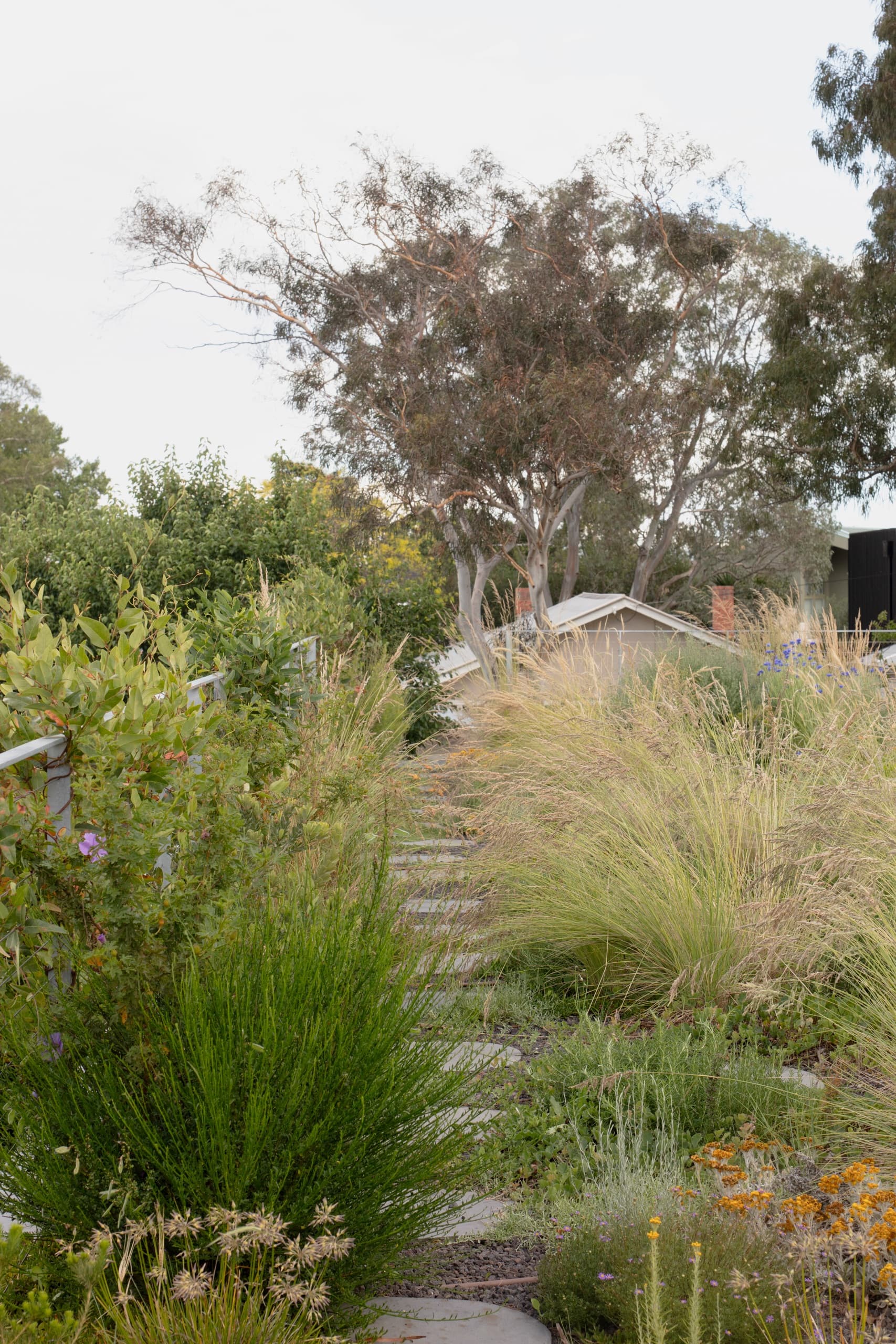
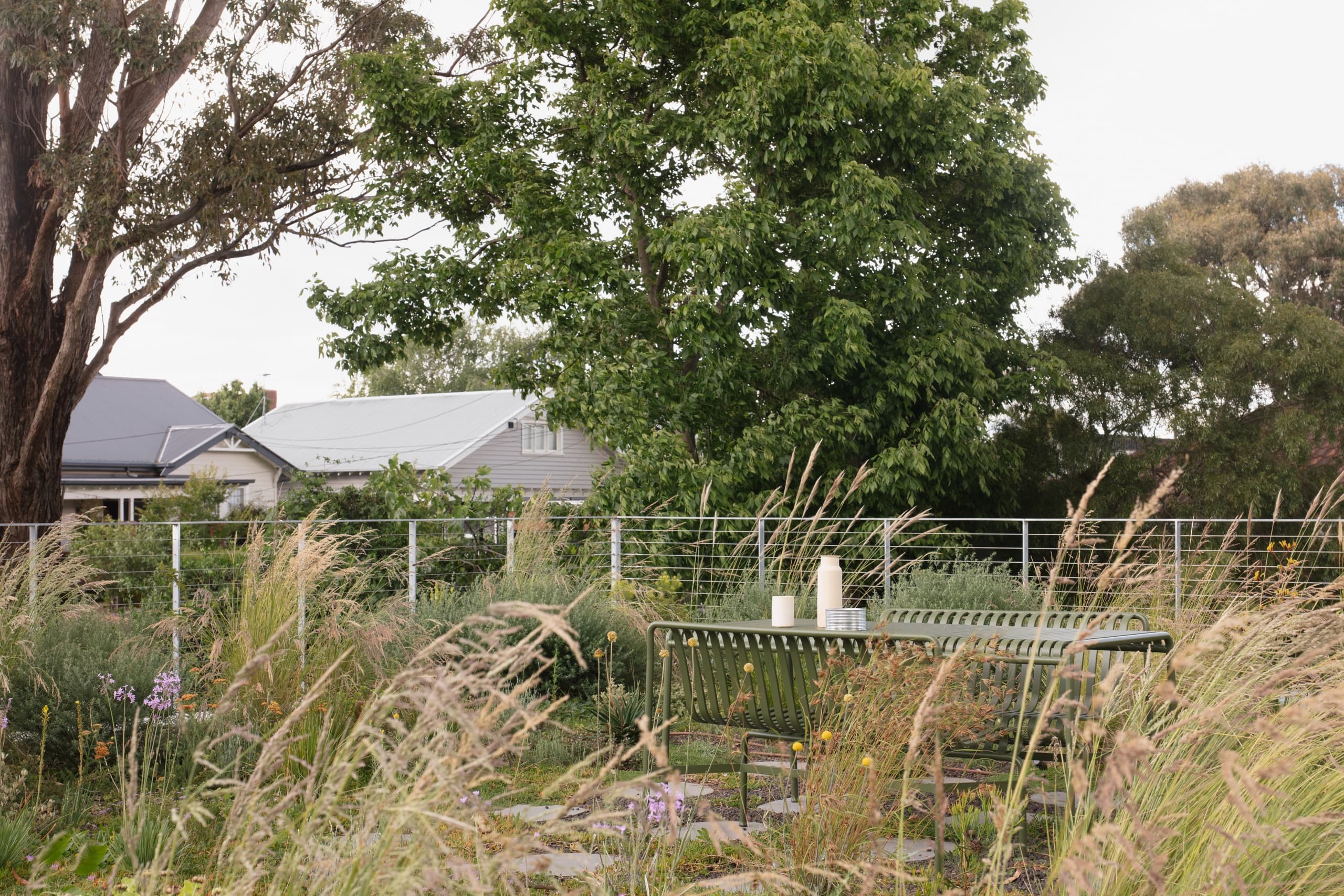
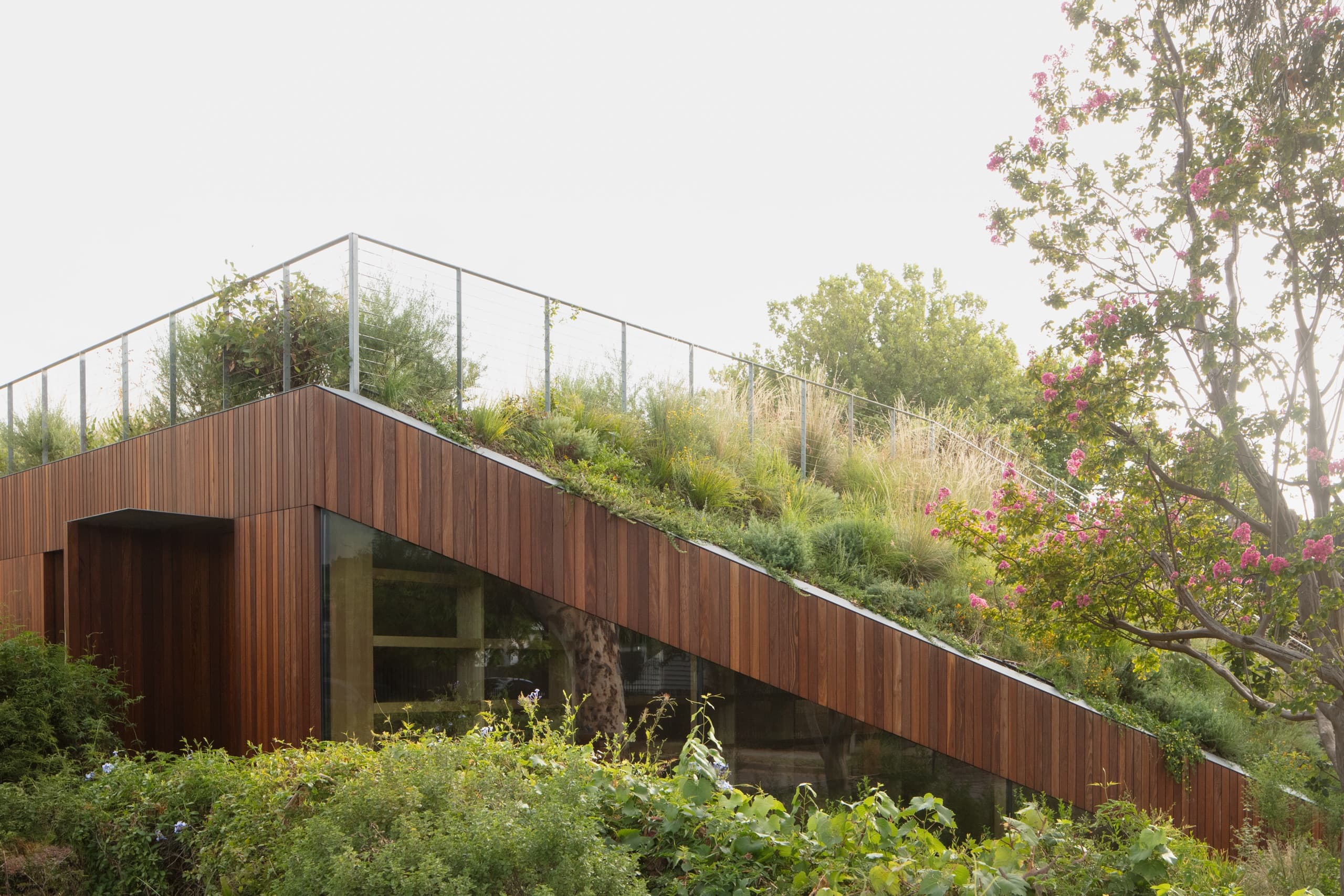
In response, the new house is a compact, single storey dwelling with a large, habitable green roof that effectively doubles the site’s usable outdoor space. From above, the entire site now reads as a continuous, expansive garden.
The front façade aligns with neighbouring dwellings, folding gently to frame the court and stepping down to meet the footpath. This gesture transforms the roof into an extension of the public realm, blurring the threshold between public and private space and allowing the informal play of the court to extend up onto the house itself.
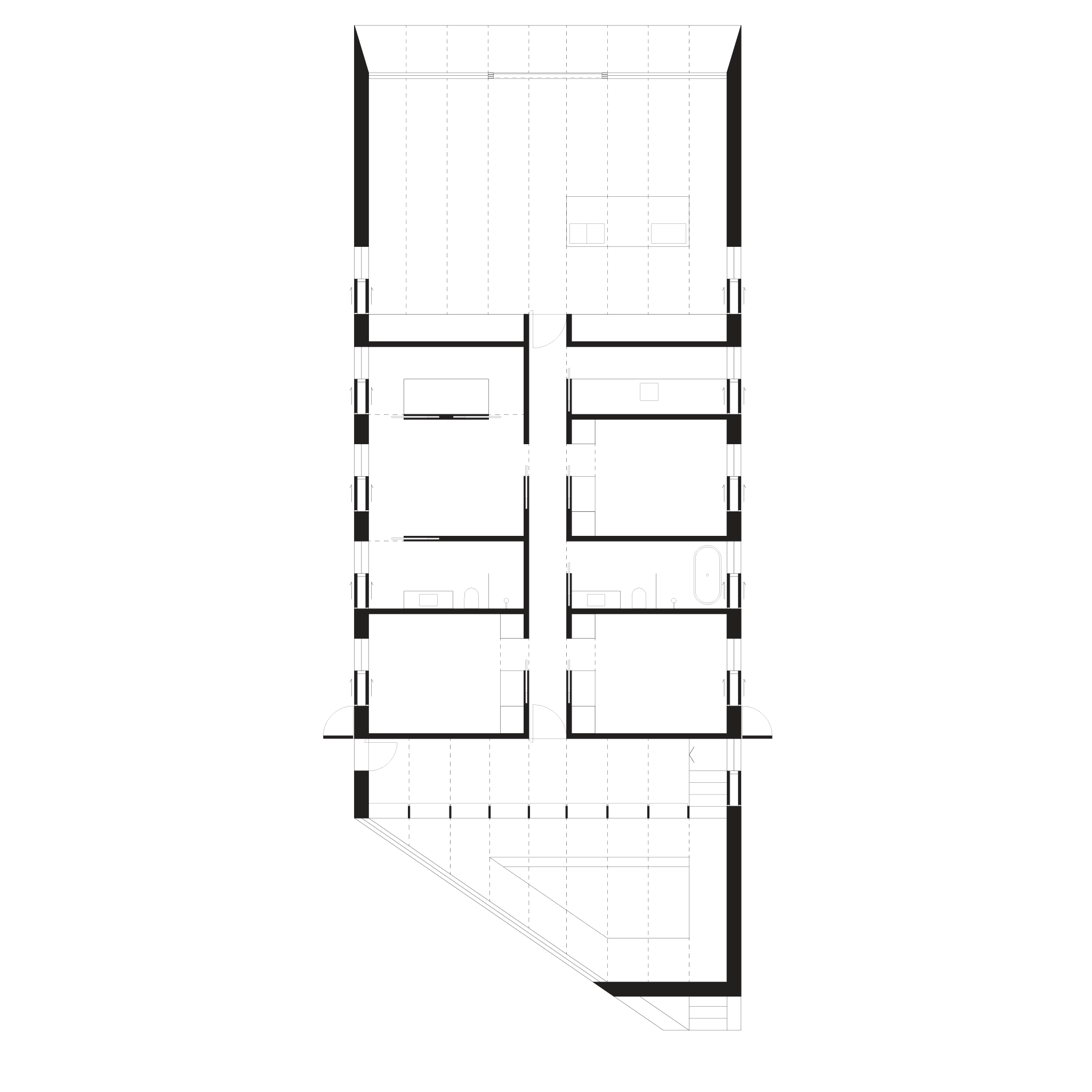
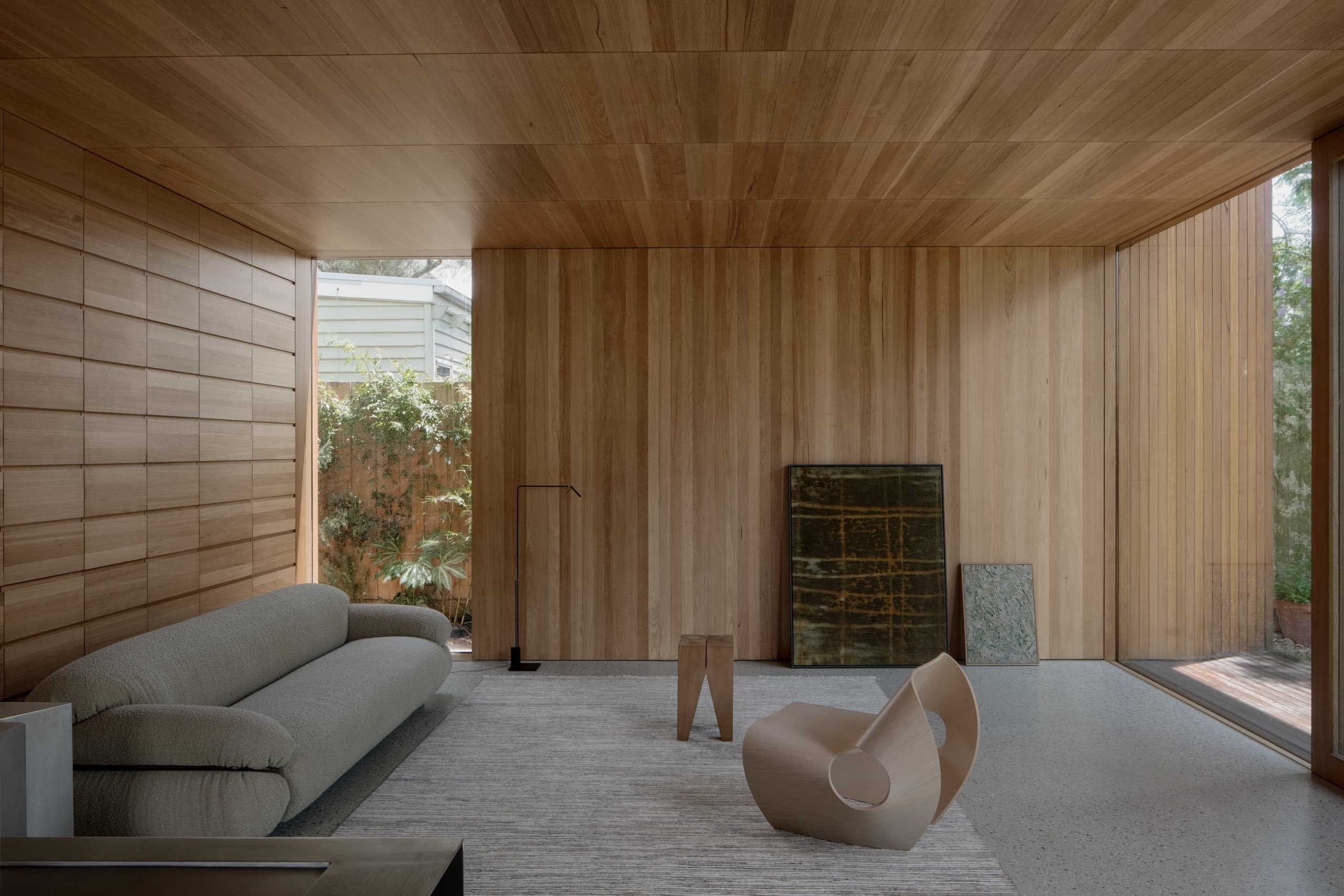
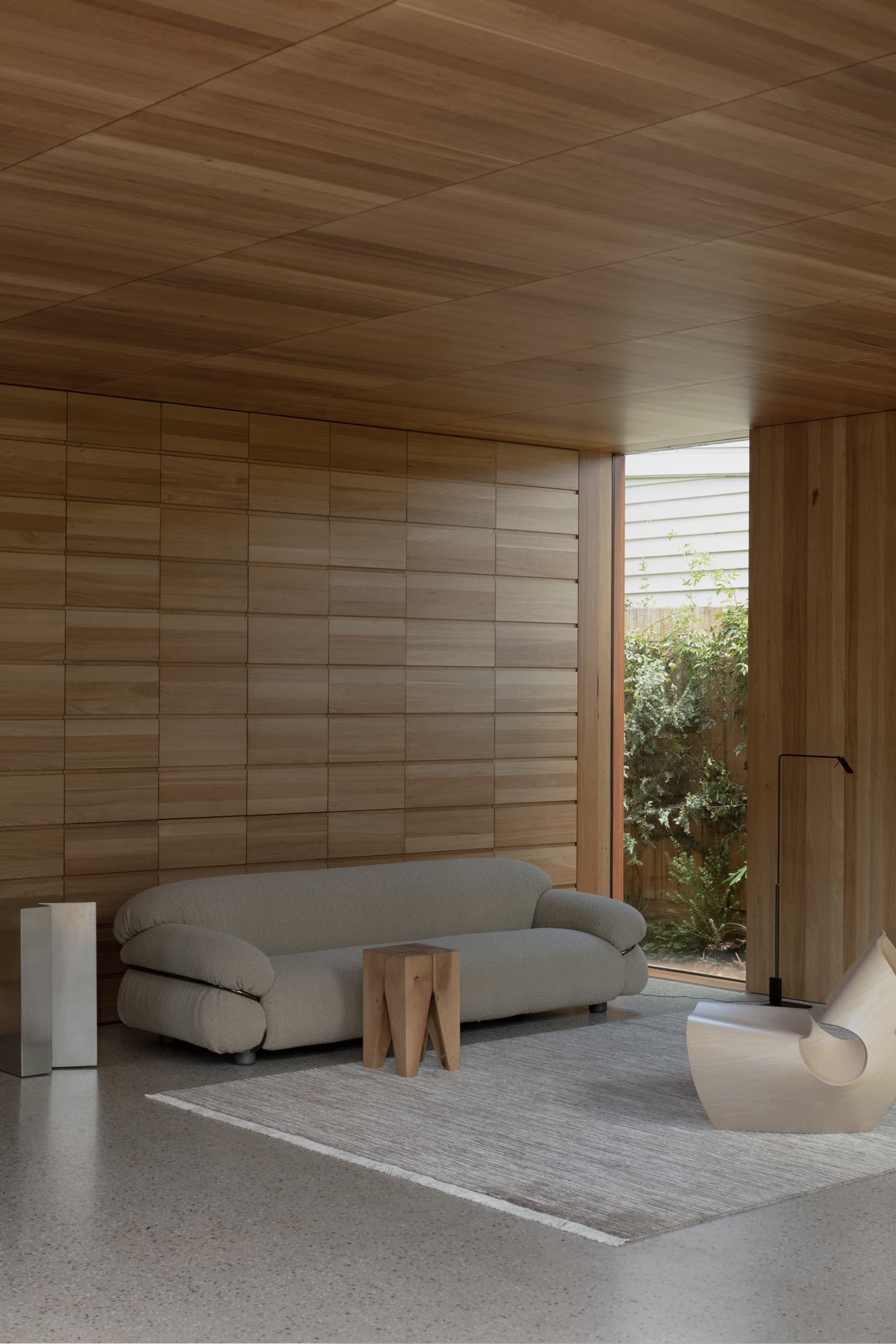
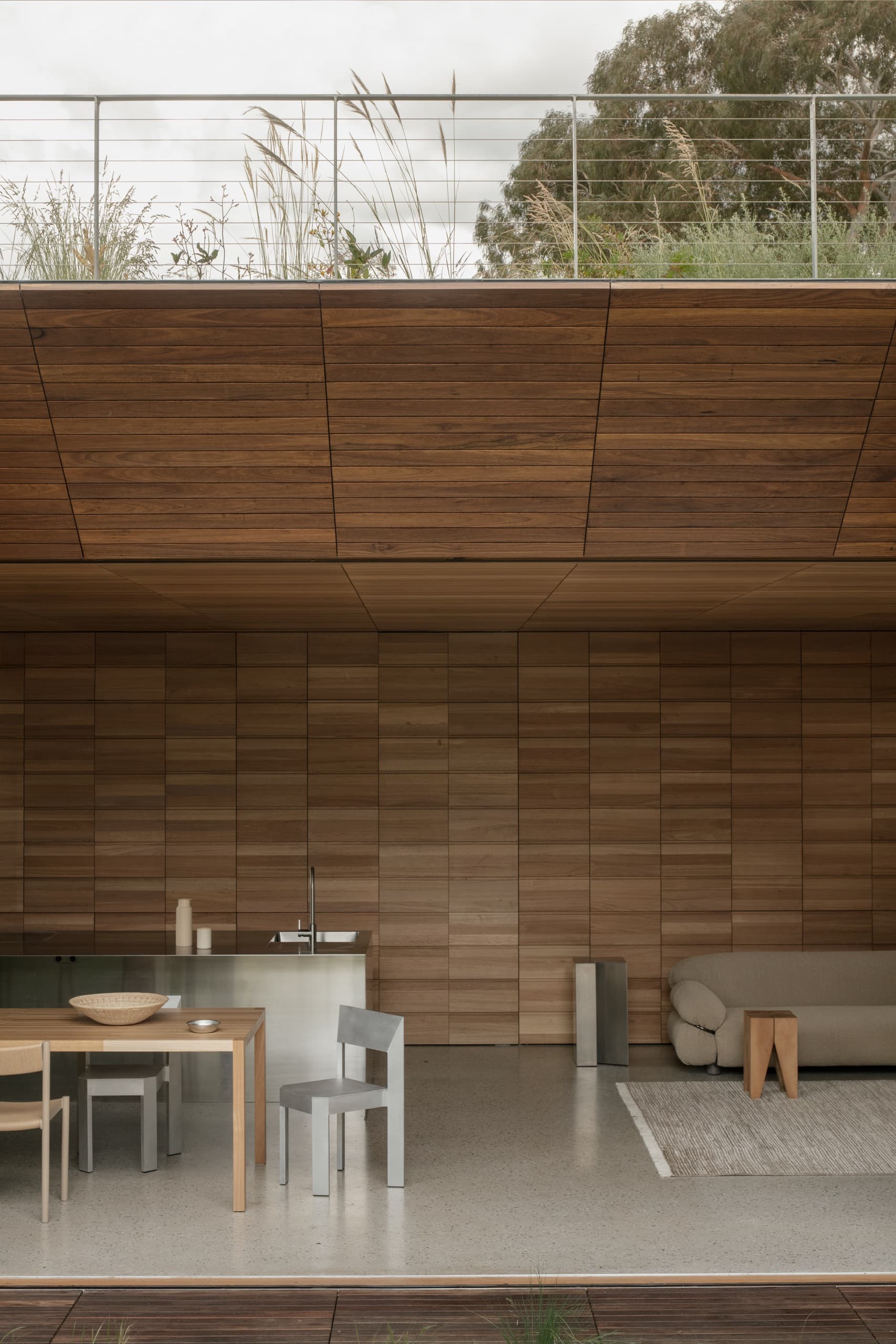
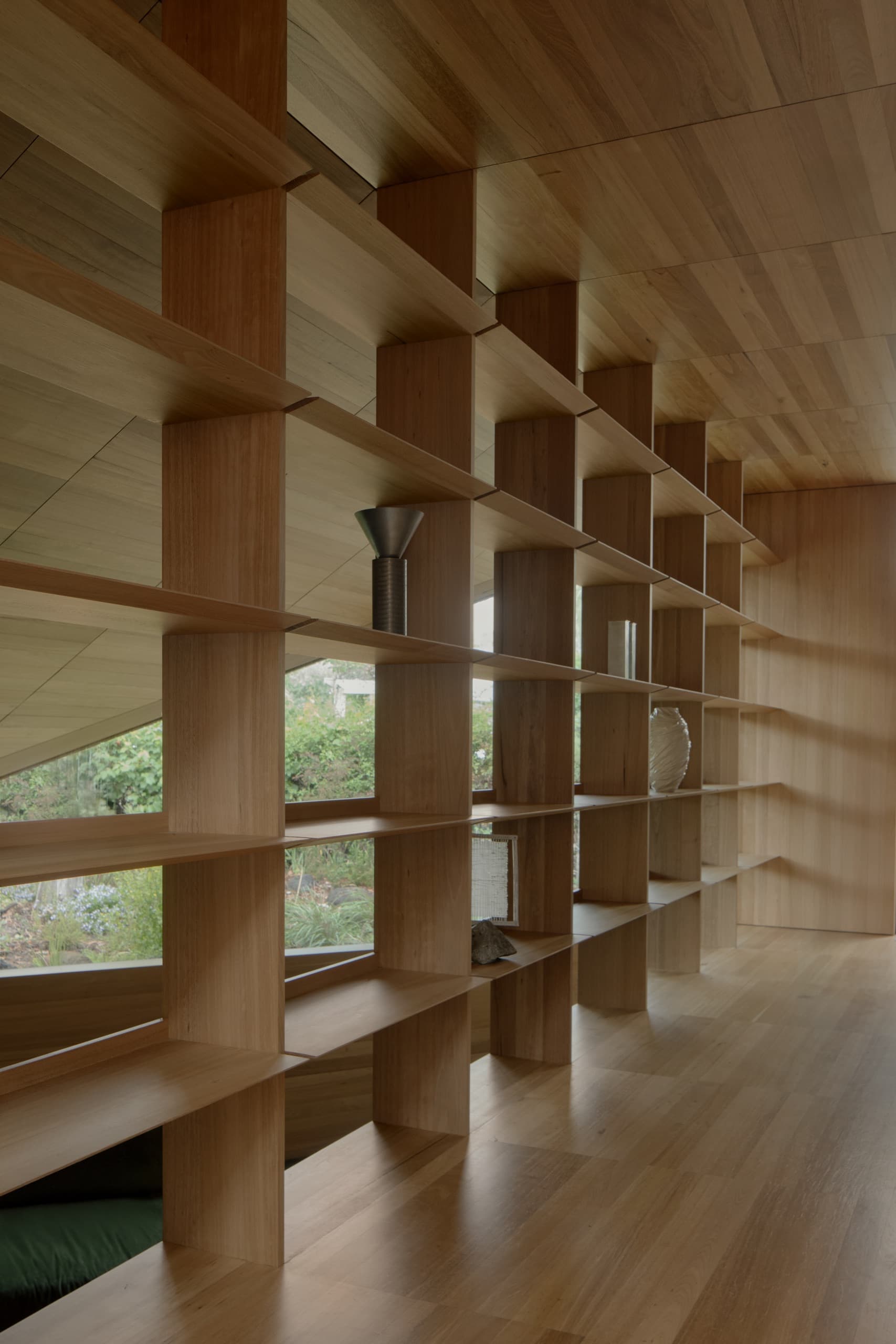
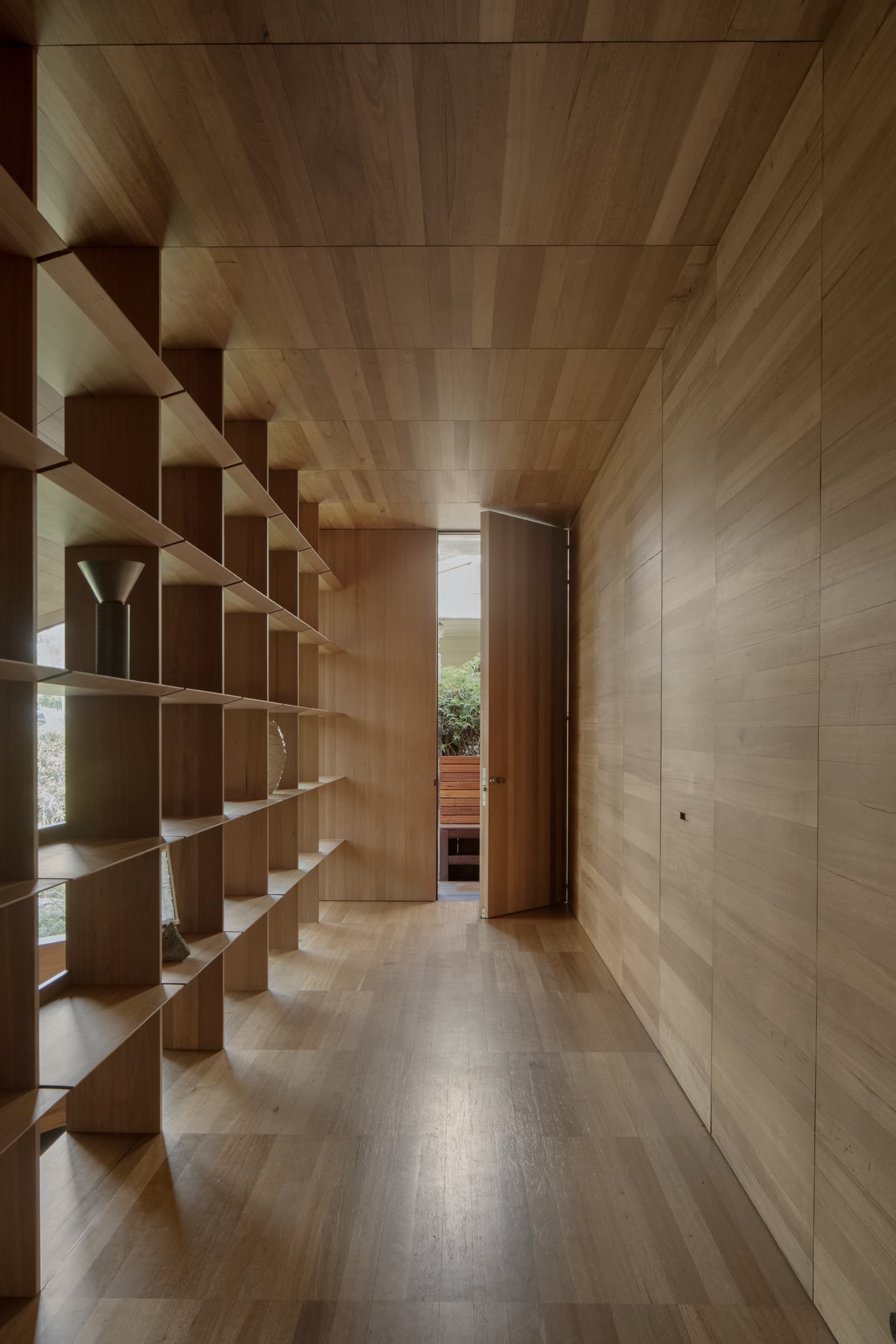
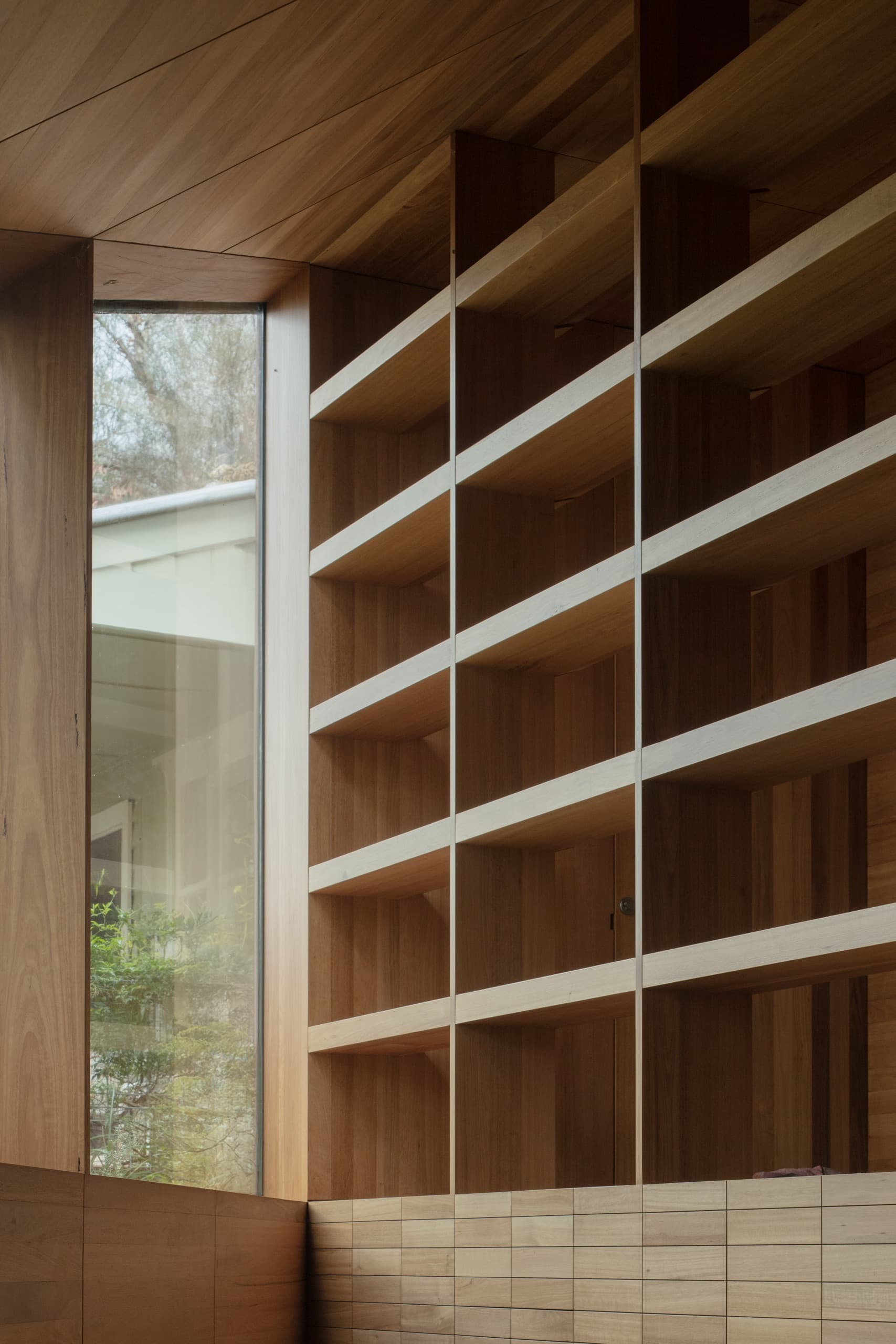
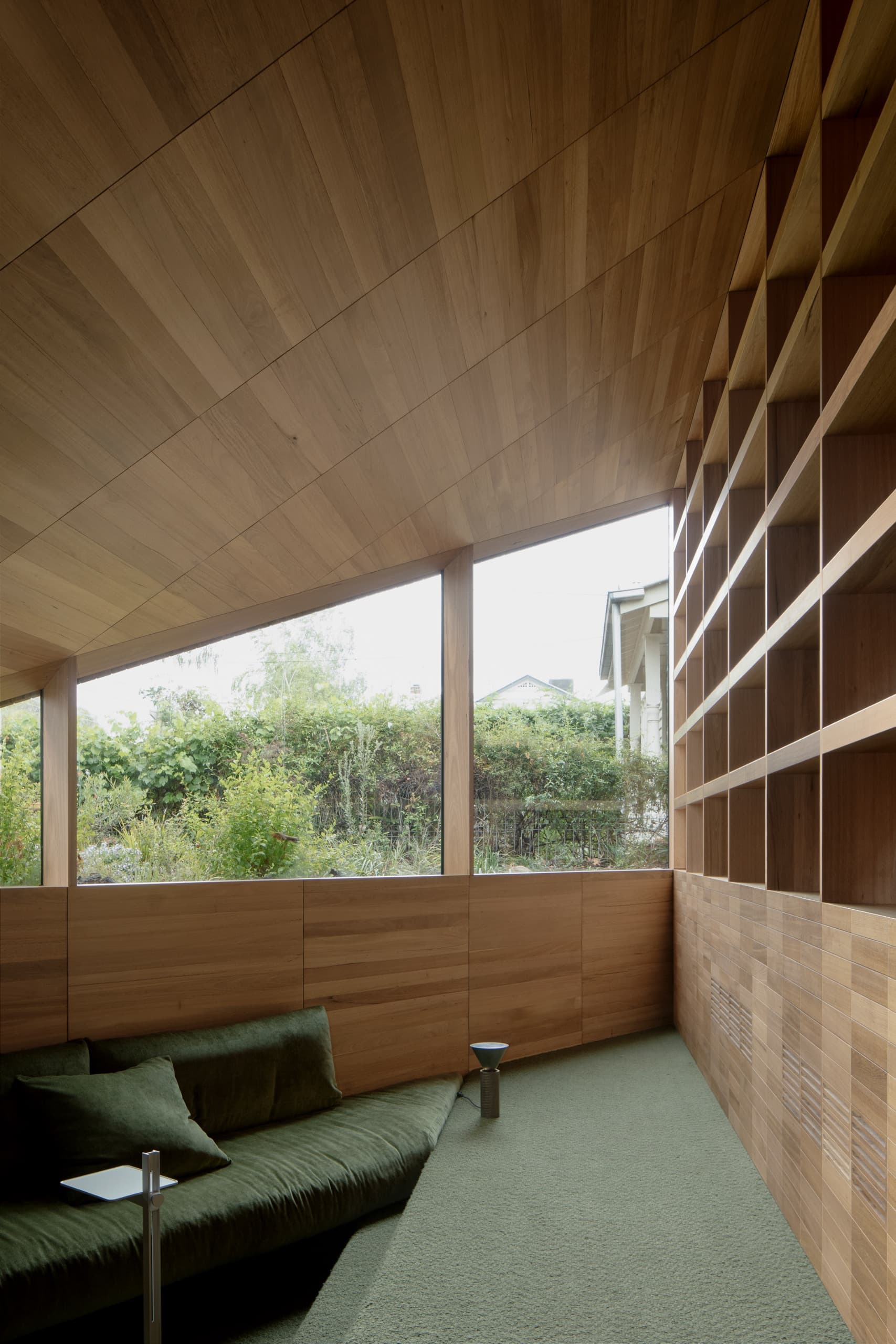
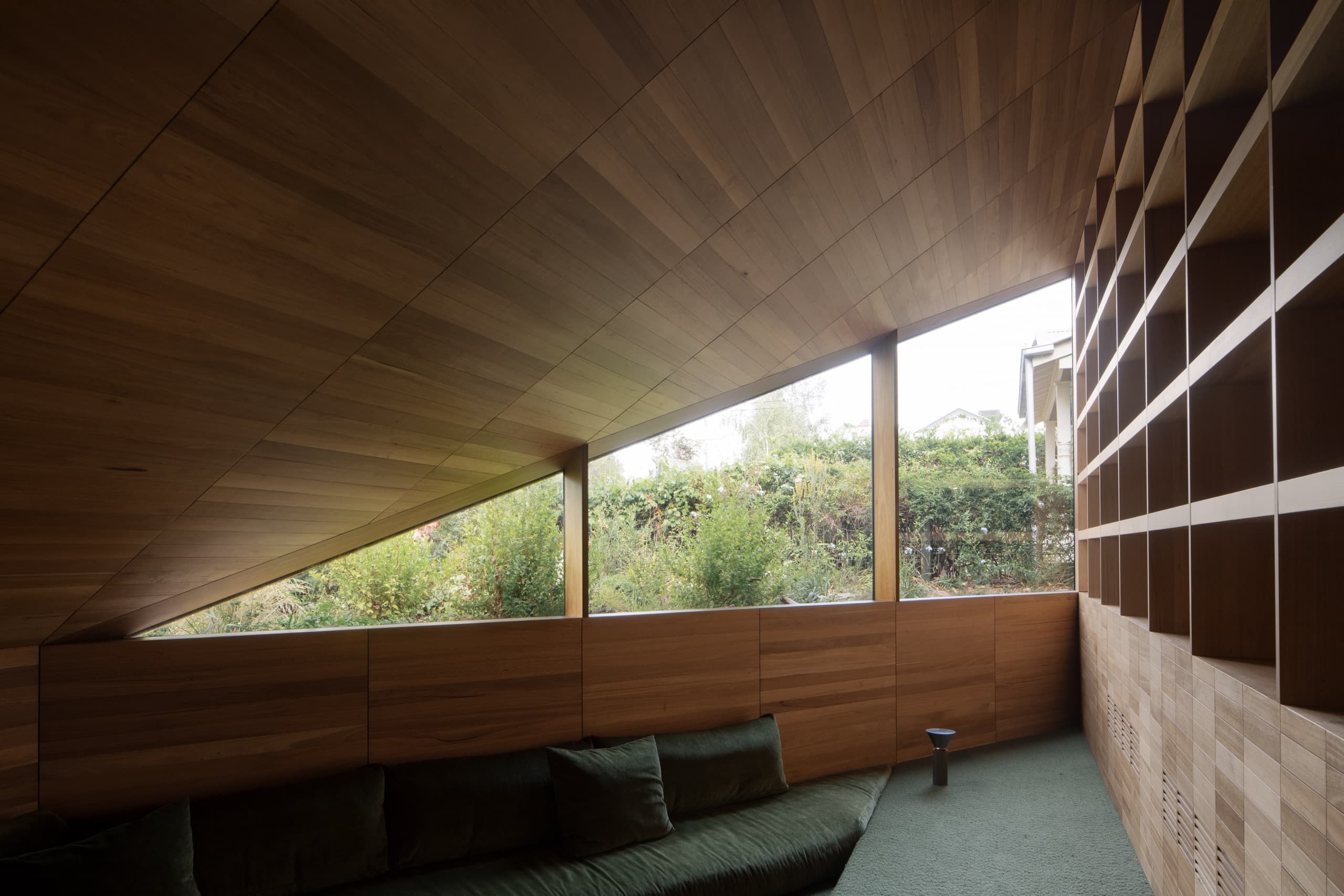
To accommodate the functions of the former two-storey dwelling within a smaller envelope, the plan is compact and efficient. Organised in a dumbbell configuration, four modest rooms sit between two living zones, one oriented toward the rear garden, the other addressing the street. The street-facing living space is multi-functional, operating as lounge, library, study, entry gallery and occasional sleeping area for children’s sleepovers. Slightly sunken below ground, it achieves privacy without sacrificing light or outlook.
The design deliberately resists several suburban conventions typically included in an architectural brief: there is no ensuite for every bedroom, no walk-in pantry, no garage, and no front fence. Instead, the architecture privileges openness, restraint, and community connection over domestic excess.
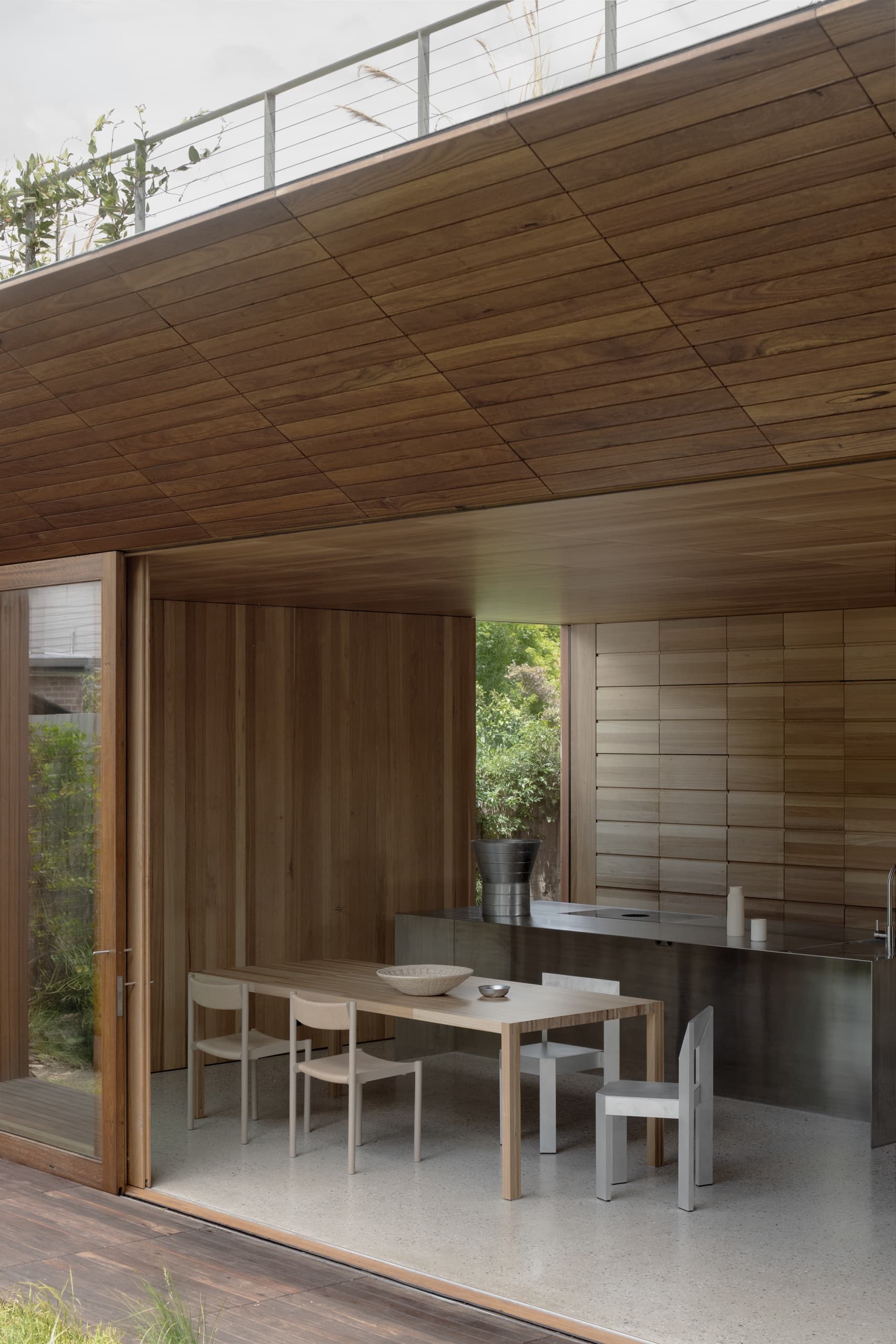
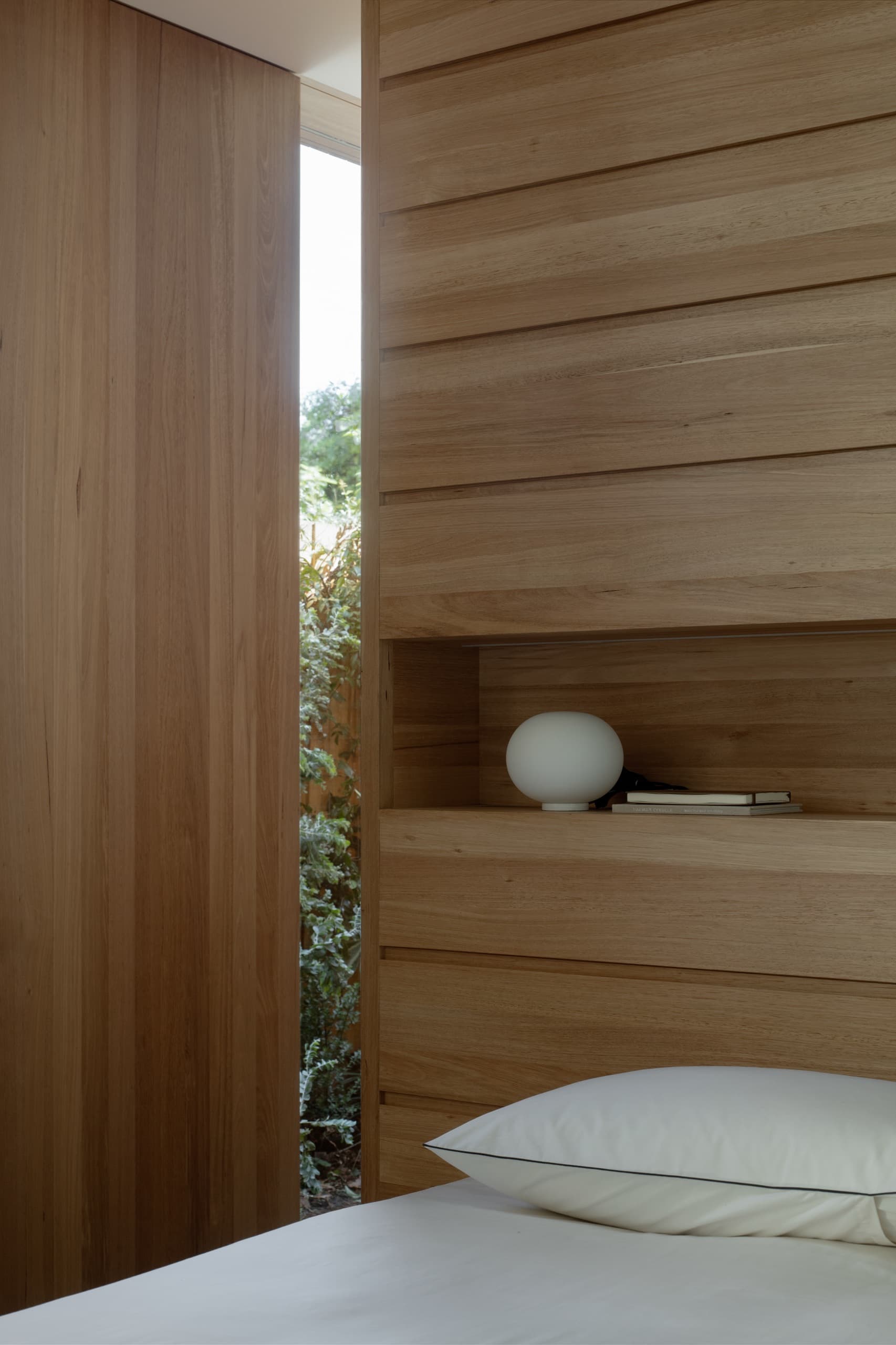
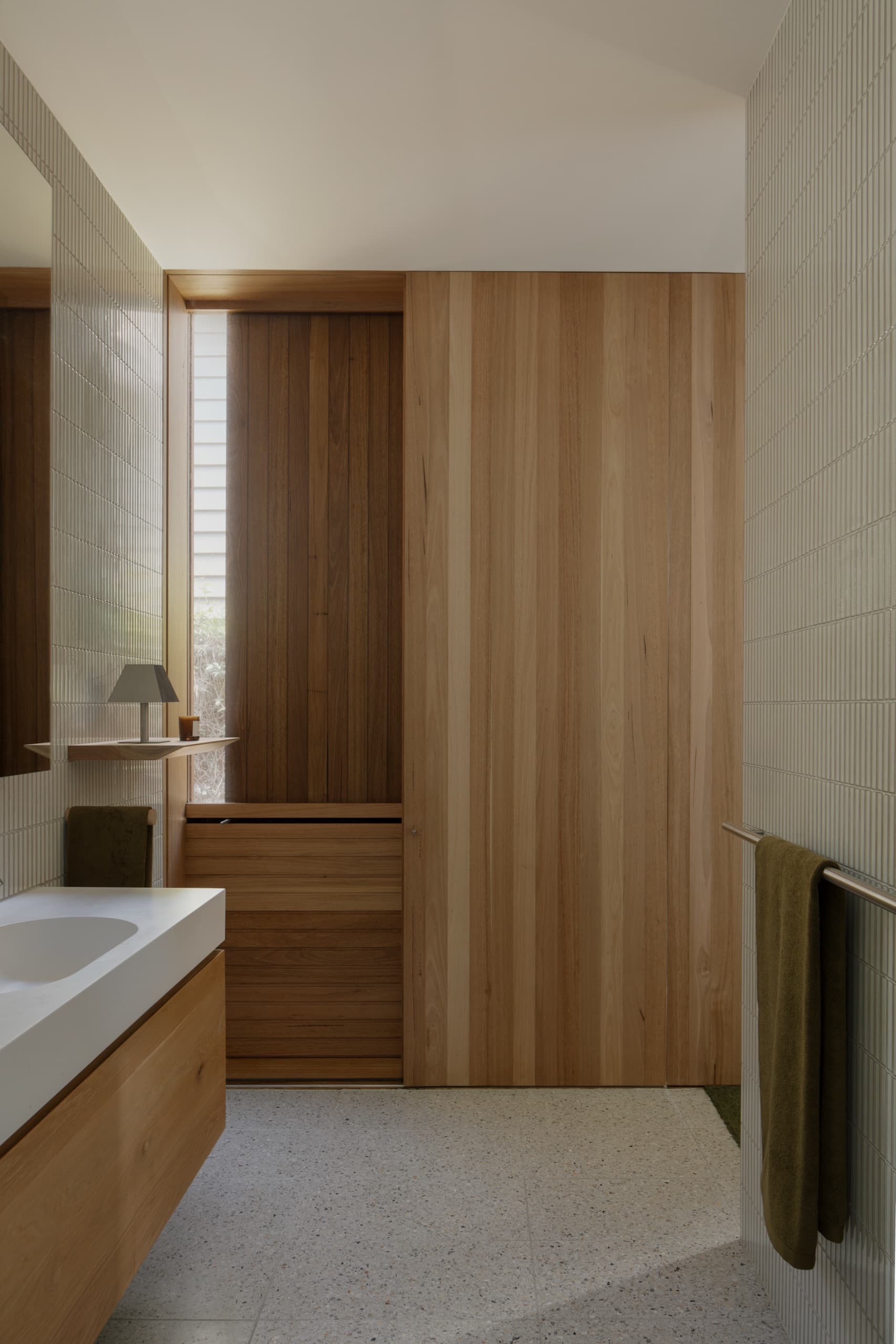
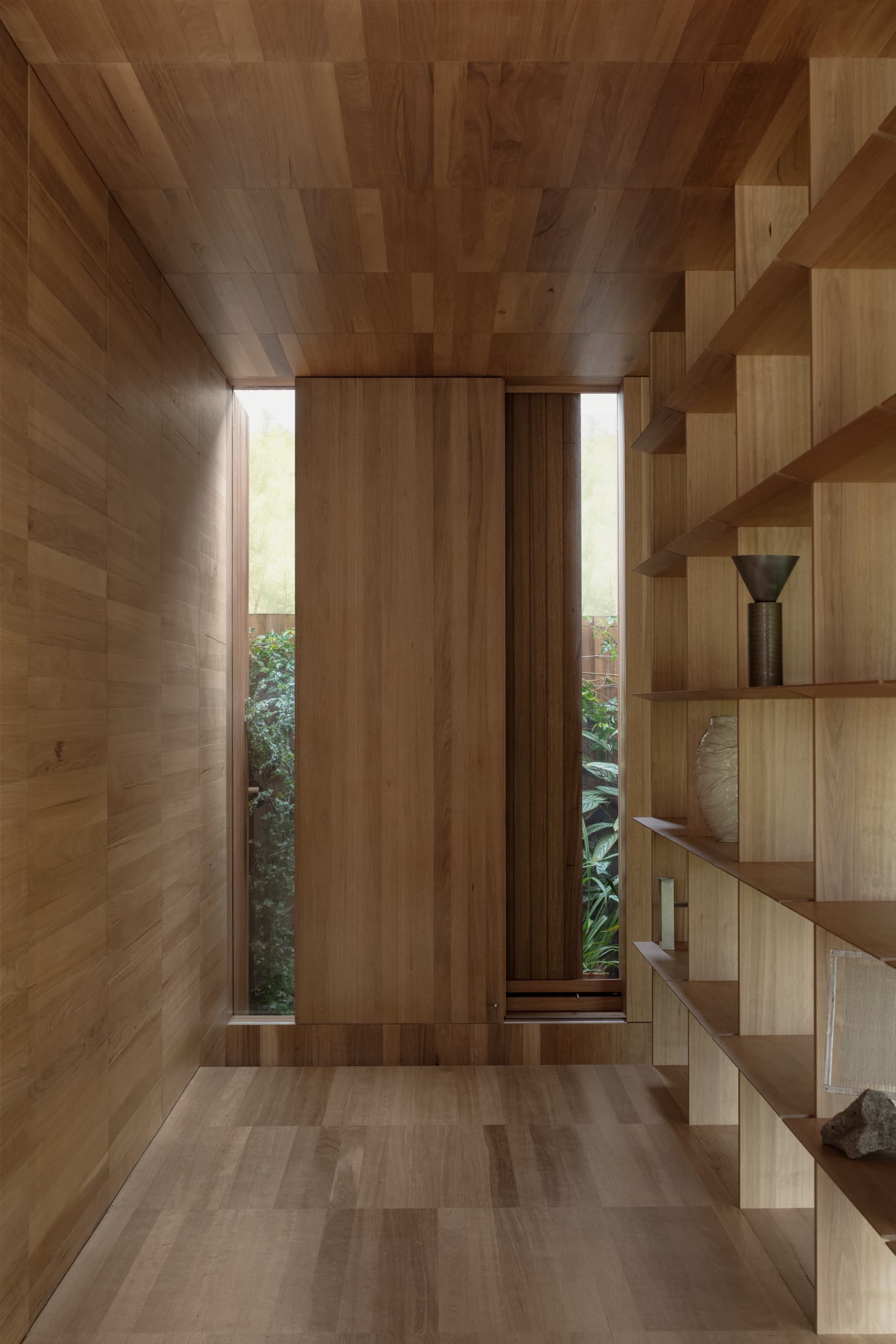
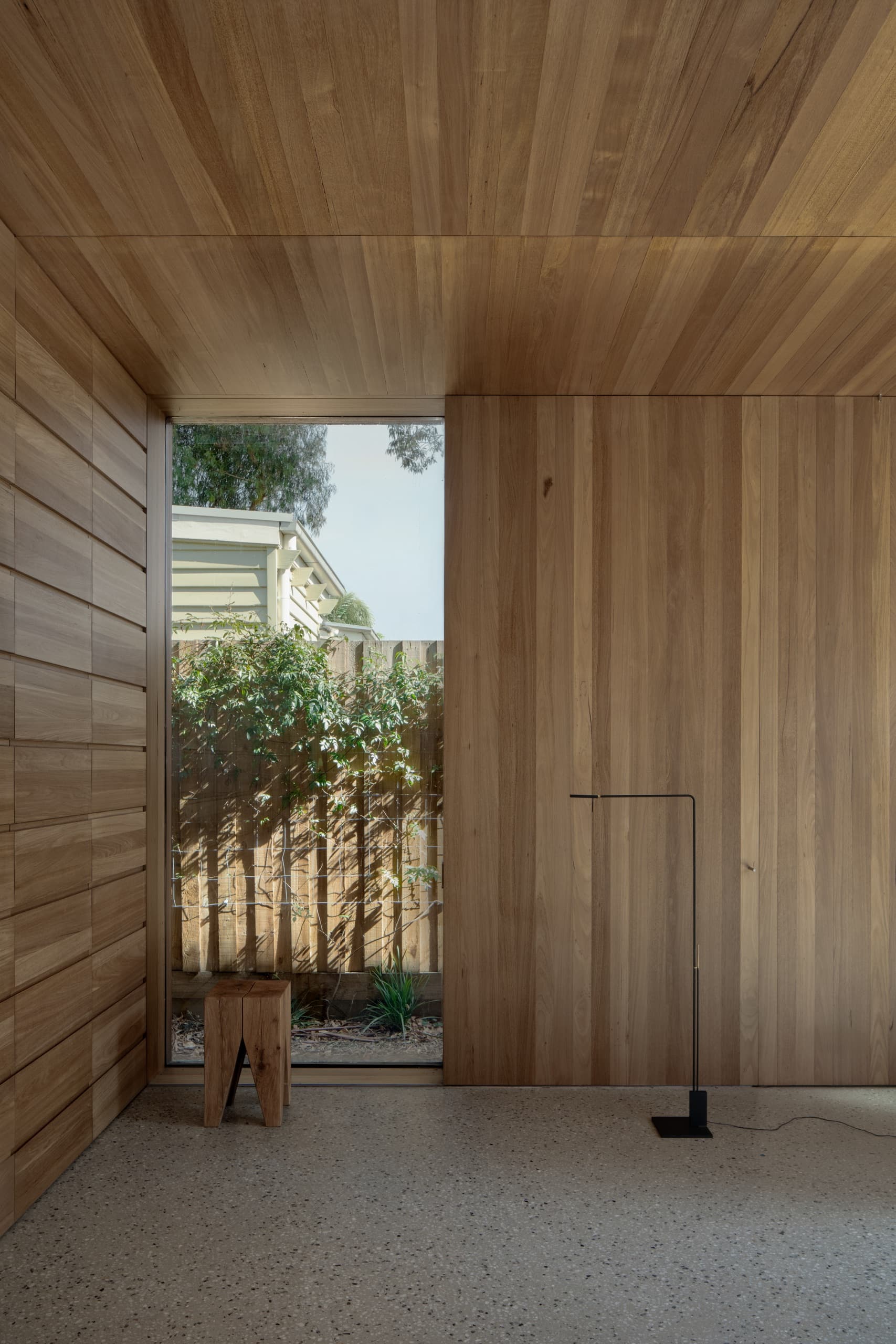
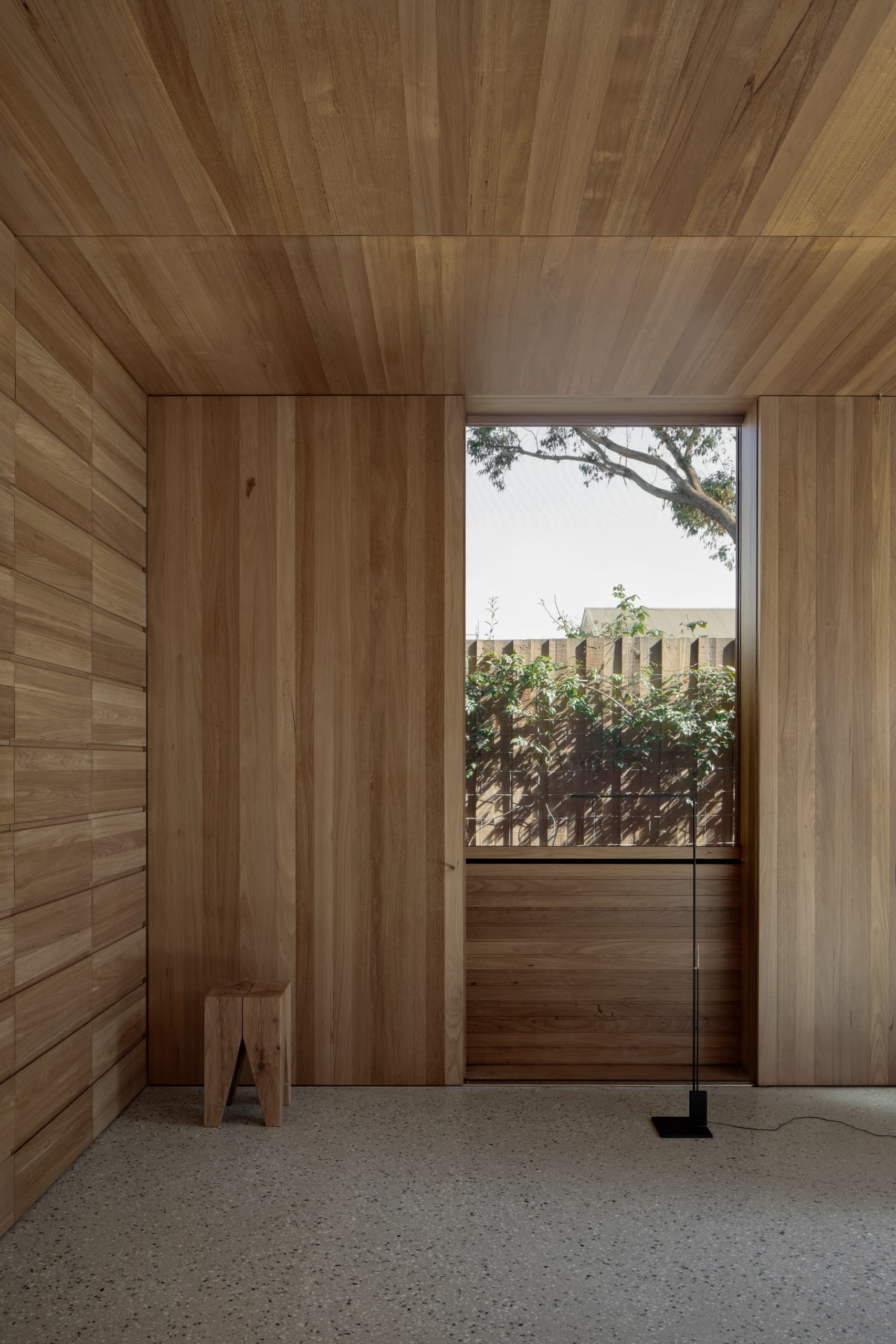
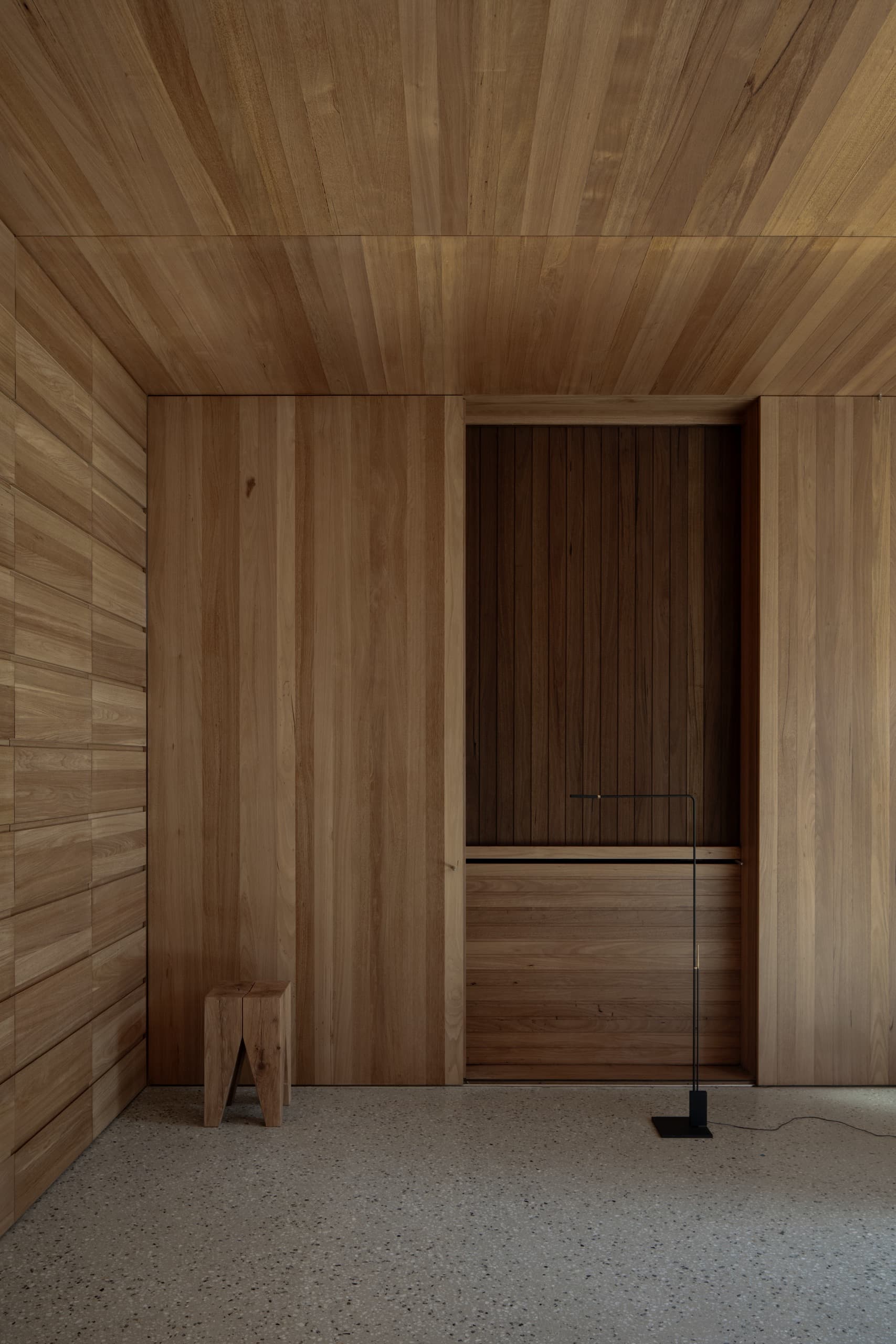
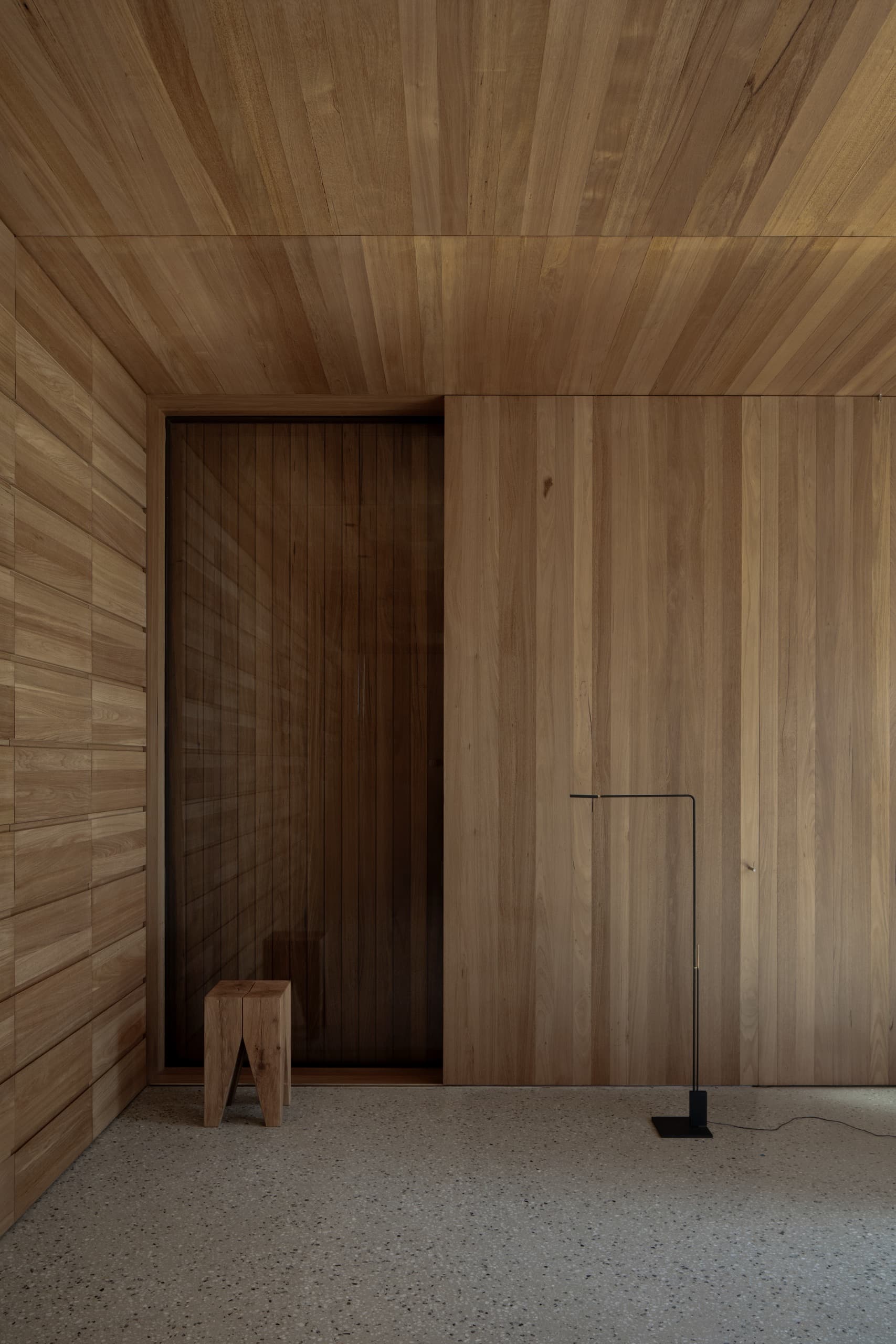
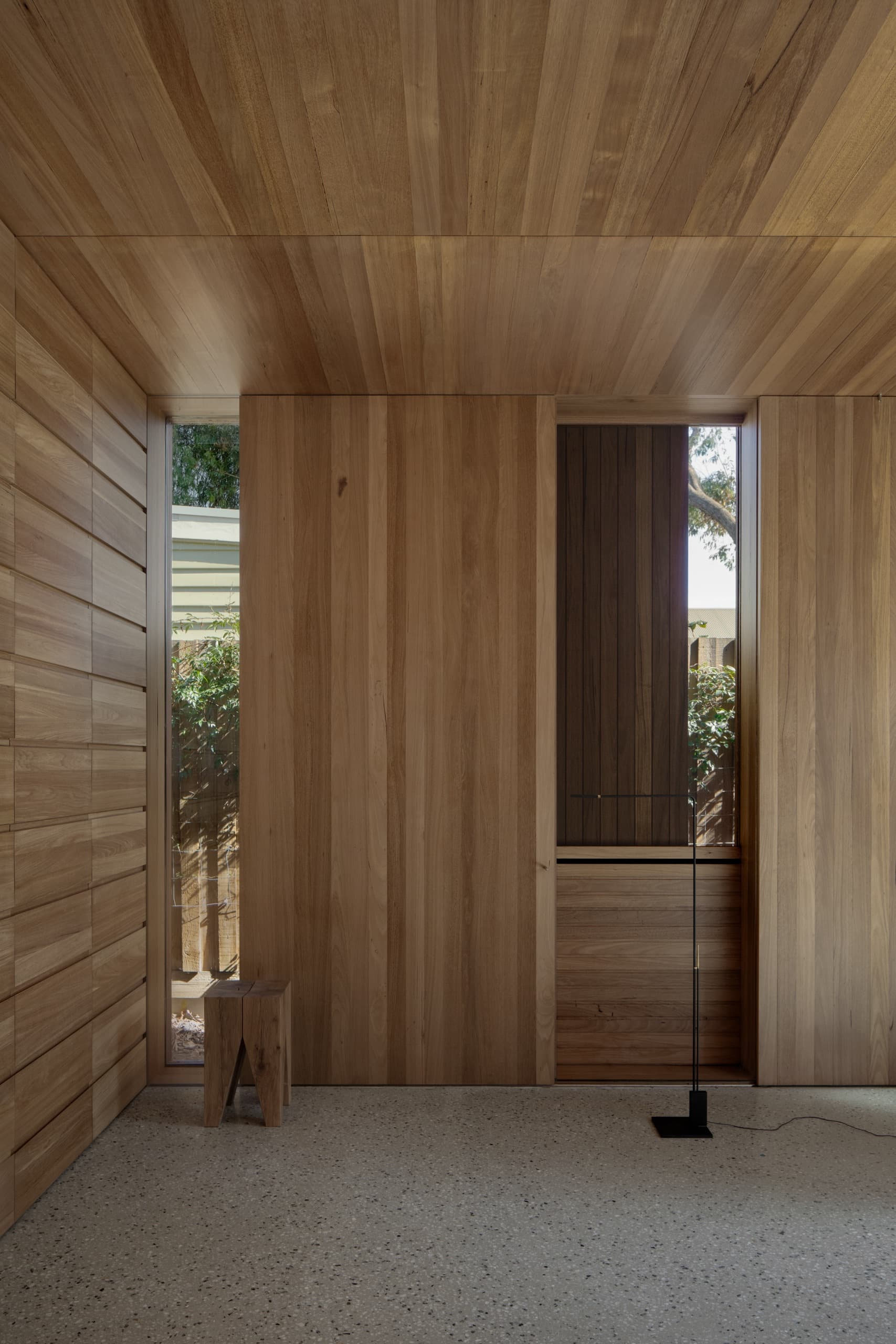
The house employs a modicum of window types. A large operable glazed wall opens to the rear garden; a fixed triangular window captures views to the street; and sliding timber-lined panels, seamlessly integrated into the east and west façades, provide nuanced control of light, ventilation, and privacy. These panels eliminate conventional window hardware, concealing operability and allowing the exterior to subtly transform throughout the day. In one position, they admit daylight and read as minimalist timber walls punctuated by fixed glass; in another, they ventilate the interior; in a third, they black out spaces for sleeping; and in a fourth, they shield interiors from sun and heat, significantly improving thermal performance.
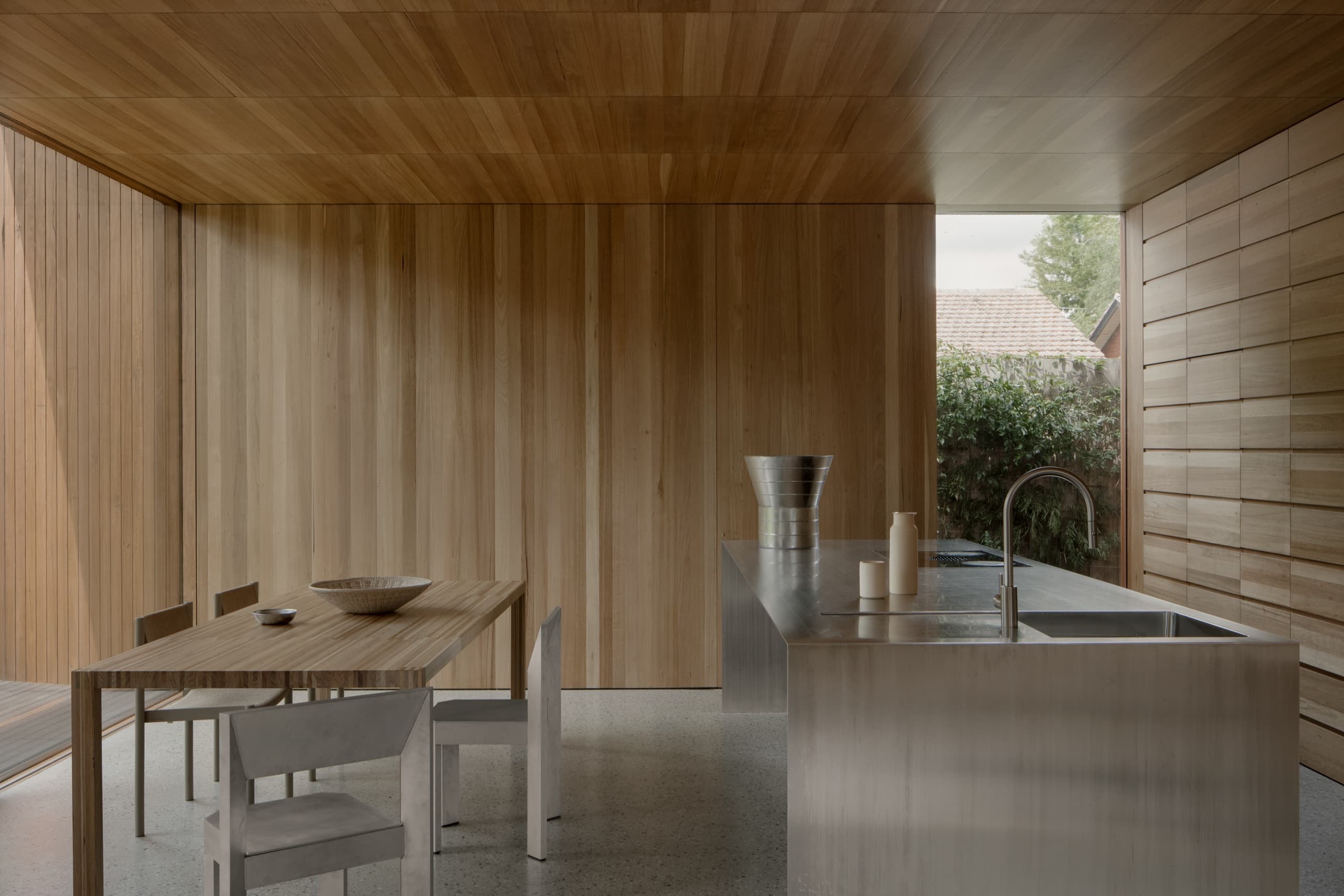
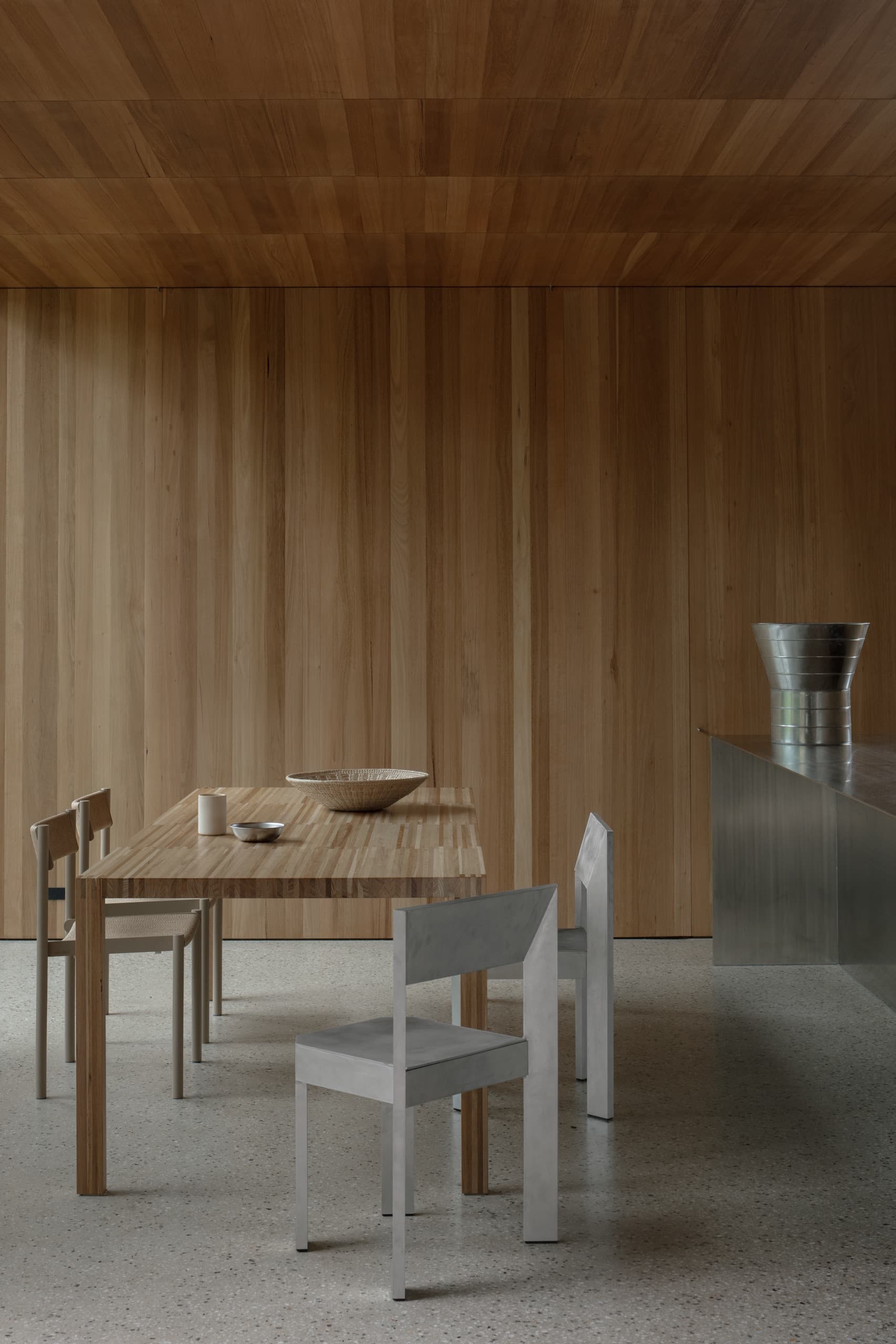
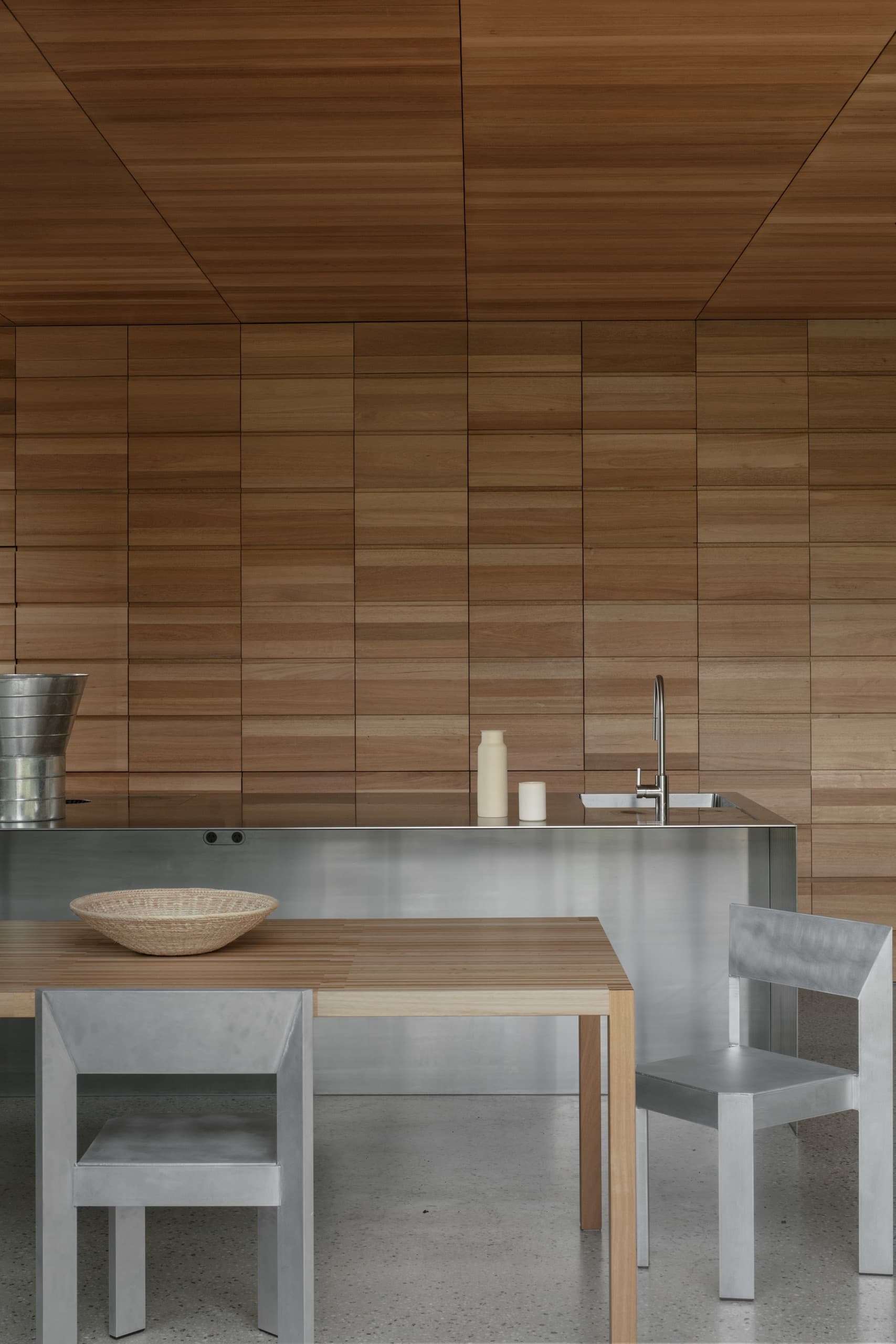
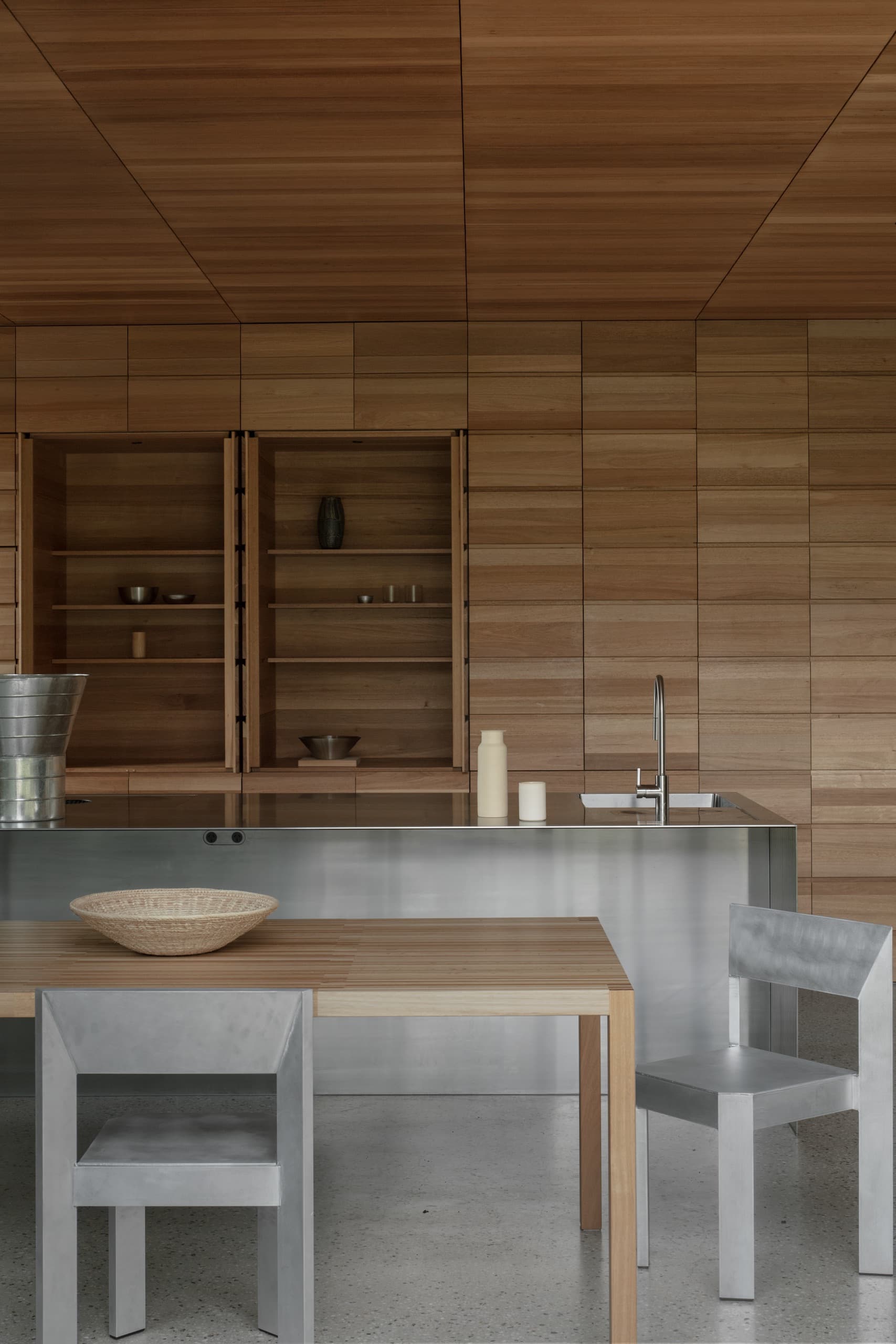
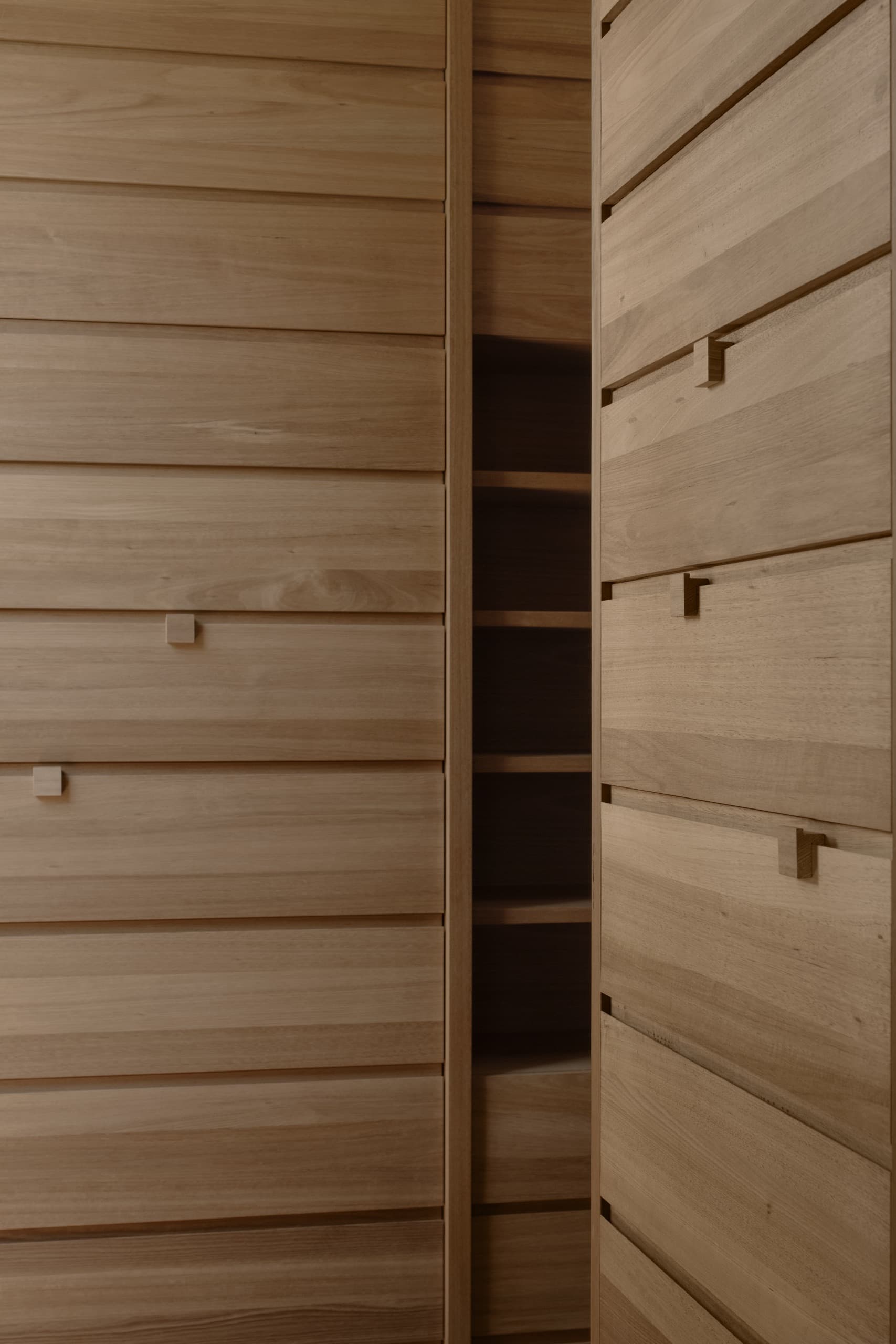
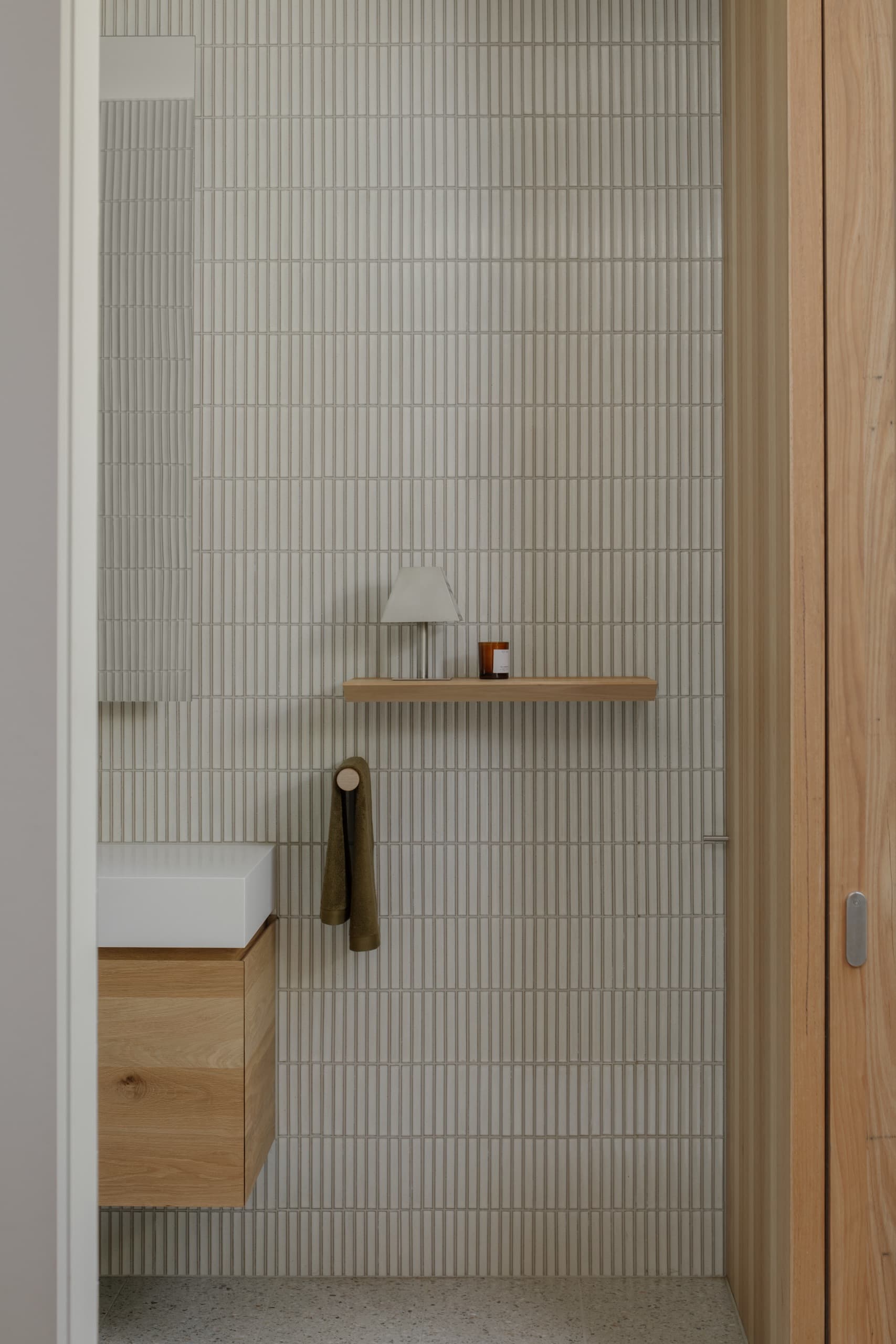
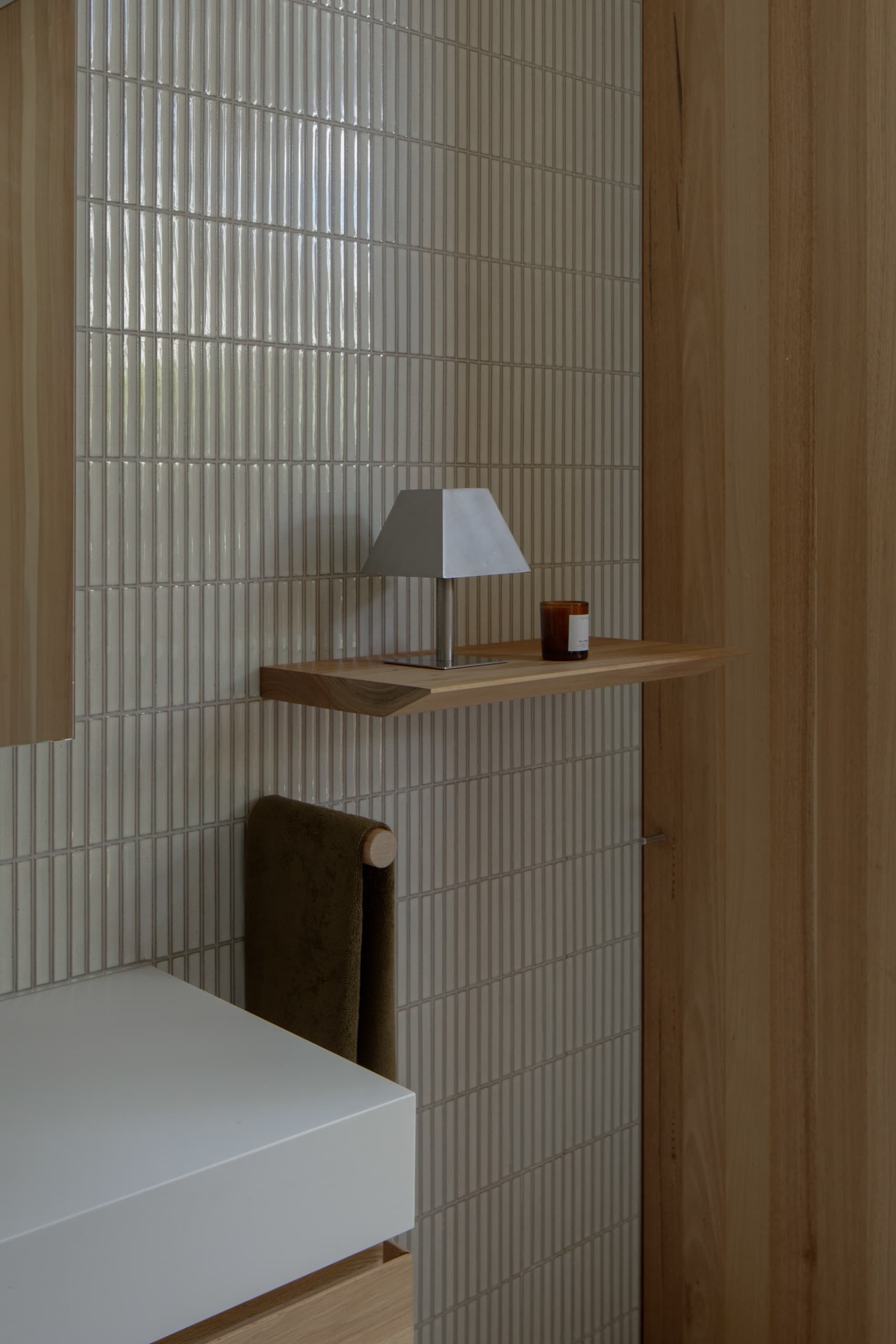
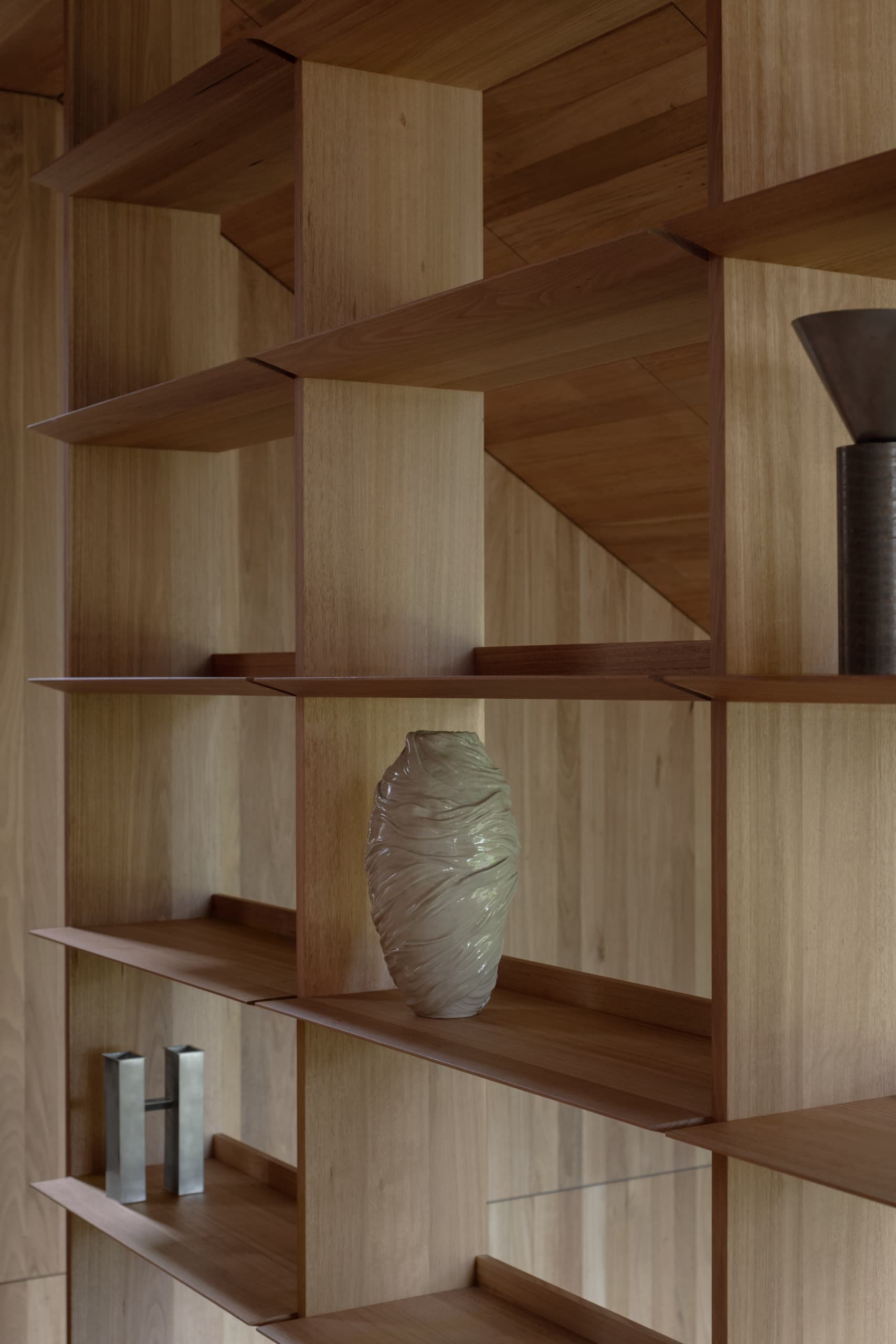
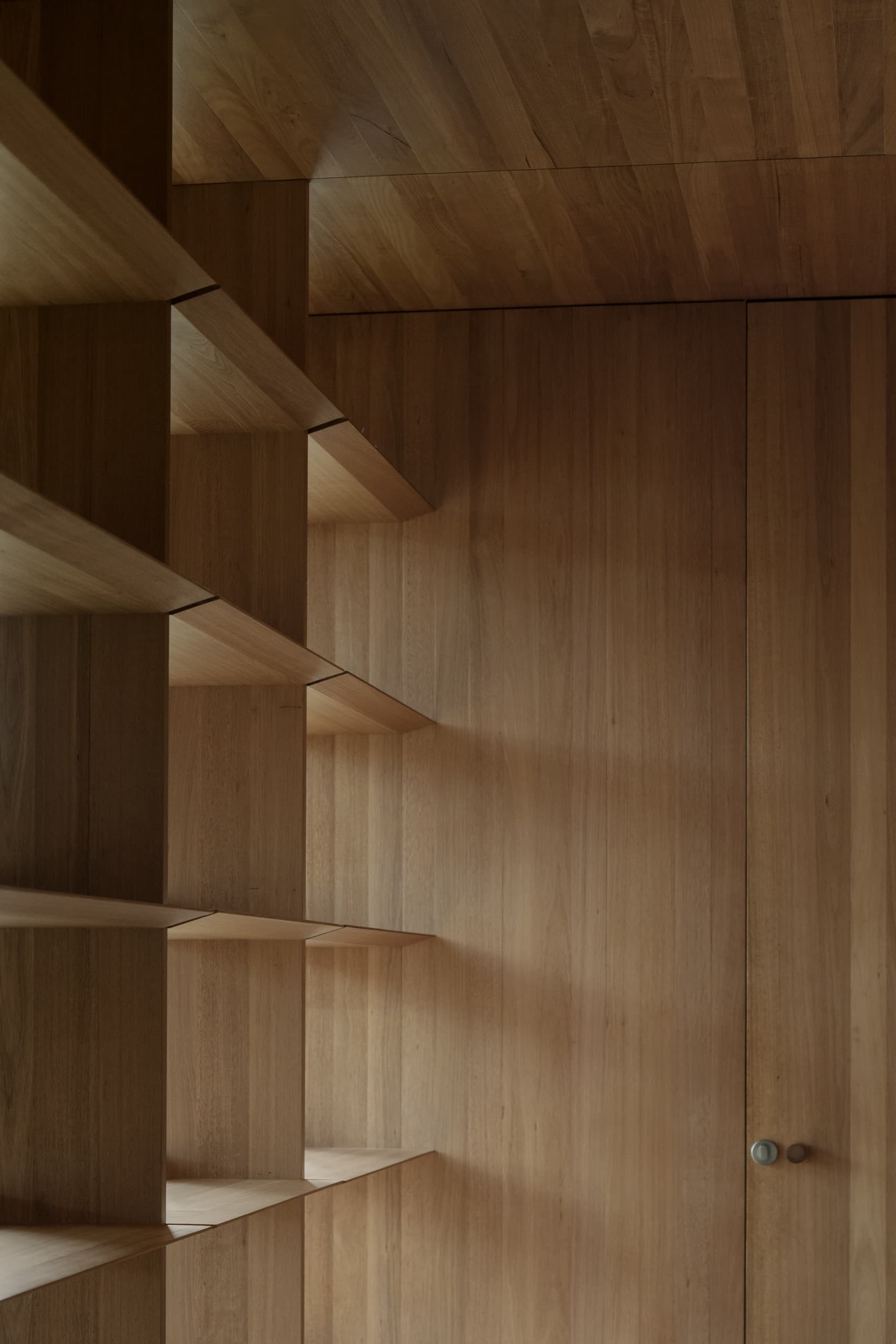
Materially, the house is unified by an almost singular palette of reclaimed timber, used for cladding, windows, doors, and joinery, imbuing the project with a tactile warmth and cohesion. Internally, the timber is milled in varied profiles to form integrated pulls, hooks, shelving, desks, benches, air-con grilles, and a picture rail system. A rigorous 75mm grid, derived from the width of a timber board, organizes every architectural element, from façade cladding to interior joinery, aligning components in plan and section to create visual clarity and precision. As this grid intersects the angled front facade, it governs all inflection points, alignments and junctions in three dimensions.
The Bank Street House draws on the lineage of landform architecture, from Adalberto Libera’s Villa Malaparte to Barry Marshall’s Phillip Island House, yet without monumentality. Instead, it nestles quietly into its suburban context, prioritising community, sustainability, and spatial richness over scale.
Credits
Photography by Ben Hosking